アカデミー記事
Safety and Compliance Standards for Motorized Curtains and Blinds
T
著者: TRTex Editorial Team
公開日: 2026年8月13日 · 最終確認日: 2026年9月28日 · ⏱️ 2 分で読めます
Mechanical Safety and Structural Resilience in Internal Blinds
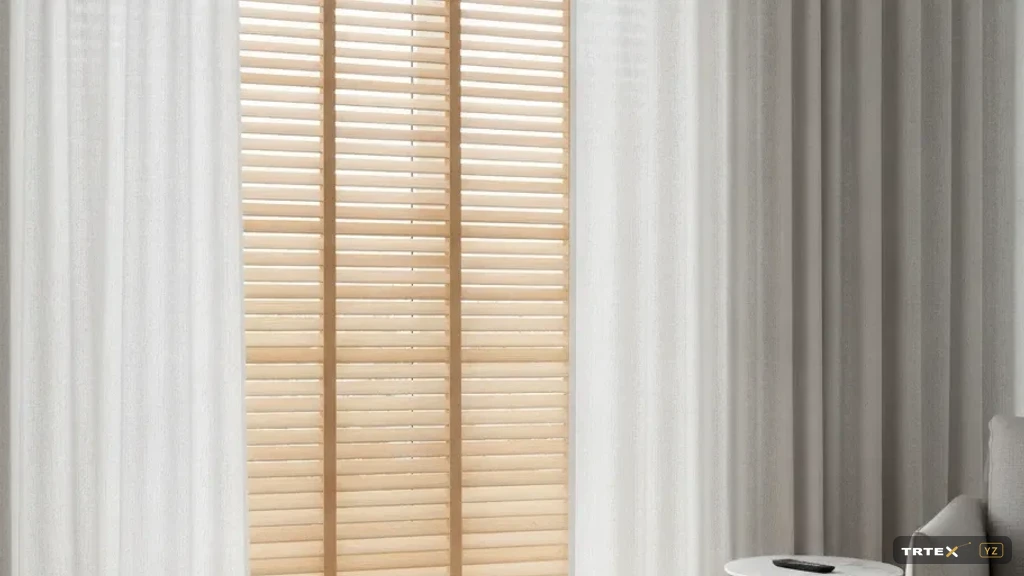
In contemporary interior architecture, wooden blinds and motorized curtain assemblies serve as technical systems meeting solar shading and aesthetic demands [2, 3]. For these assemblies to enter international markets, compliance with defined mechanical design standards is required [2]. Across the European market, standard EN 13120 establishes binding safety requirements for internal blinds [2]. Standard EN 13120 mandates mechanical protective features on indoor blinds and shades to safeguard young children against the hazard of strangulation in cord loops [2]. These safety requirements apply to all freely suspended indoor mechanical window coverings, excluding sealed double-glazed units [2].
Electrical Safety in Motorized Systems and CE Conformity
Motorized and remotely operated curtain mechanisms can be integrated into voice-control and smart platforms such as Apple Home, Amazon Alexa, and Google Assistant in line with occupant comfort expectations [3]. However, the commercial acceptance of these electrical components in international trade depends on strict safety directives [4, 6].
Electric curtain and blind motors exported to the European Union are governed by the IEC 60335 safety standards series [4]. General electrical apparatus safety is addressed under IEC 60335-1, whereas specific requirements for curtain, blind, and shutter drives are defined under IEC 60335-2-97 [4]. Furthermore, these motors must comply with hazardous substance restrictions under RoHS Directive 2011/65/EU and bear the official CE conformity marking [6].
Responsible Material Sourcing and Human Ecology
FSC (Forest Stewardship Council) certification is requested to verify that timber used in wooden blinds originates from sustainable forest resources [5]. Administered by the Forest Stewardship Council, FSC standards confirm the implementation of responsible forestry principles throughout the forest products supply chain [5].
Fabric, tape, or cord components integrated into the system must also pass chemical safety evaluations [7]. The OEKO-TEX Standard 100 label documents that textile components have been tested for harmful substances [7]. For reaction-to-fire performance, structural elements are evaluated under EN 13501-1 classification criteria [1]. Assembling FSC timber certification, EN 13120 mechanical safety reports, and CE-marked motor documentation facilitates tender qualification for manufacturers [2, 5, 6].
T
TRTex Editorial Team
AIの支援により作成 · TRTex AI
本コンテンツはAIの支援により作成されています(EU AI法 2024/1689、第50条)。出典のある情報には出典へのリンクを付しています。誤りや不足している情報にお気づきの場合は、お問い合わせページからご連絡ください。
出典・引用
- SIS — İsveç Standartlar Enstitüsü (EN 13501-1) (閲覧日: 2026-09-28) — sis.se ↗
- SIS — İsveç Standartlar Enstitüsü (EN 13120) (閲覧日: 2026-09-28) — sis.se ↗
- Somfy (motor üreticisi) (閲覧日: 2026-09-28) — somfysystems.com ↗
- IEC (閲覧日: 2026-09-28) — webstore.iec.ch ↗
- FSC (閲覧日: 2026-09-28) — fsc.org ↗
- Avrupa Birliği (RoHS Direktifi 2011/65/EU) (閲覧日: 2026-09-28) — eur-lex.europa.eu ↗
- OEKO-TEX (閲覧日: 2026-09-28) — oeko-tex.com ↗