Five-Year Overview in Home Textile Exports: What Do the Figures Reveal?
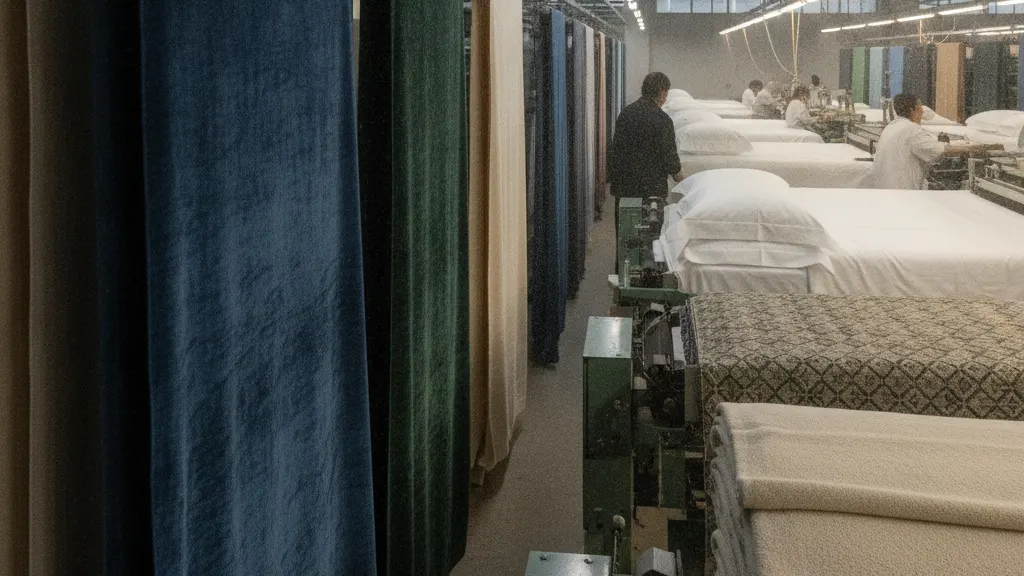
Turkish home textile exports decreased from $2.3 billion to $1.7 billion over the past five years. However, a 23% surge in exports to Egypt and robust expansion in technical textiles unlock promising avenues for the sector.
The Turkish home textile sector has confronted profound transformations and multifaceted headwinds over the past five years. Global macroeconomic volatility, shifting consumer buying behaviors, and intensifying competitive pressure have directly impacted export performance. Turkish home textile exports, which stood at the level of $2.3 billion in 2021, contracted to $1.7 billion in 2025, as officially announced by the President of TIM (AA, May 2026). This contraction underscores the urgent necessity for thorough analytical assessment and comprehensive strategic restructuring across industry stakeholders.
This decline was not confined solely to the home textile category, but simultaneously weighed on the overarching performance of Türkiye's textiles and raw materials exports. According to ITHIB data, Türkiye's textiles and raw materials exports recorded a 0.8% decrease in 2025, settling at $11.39 billion (Textilegence). This macroeconomic reality highlights the critical requirement for an all-encompassing strategic review and decisive focus on emerging growth corridors across the Turkish textile manufacturing ecosystem.
Details of the Contraction in Home Textile Exports and Category Performance
The general decline across home textile shipments exhibits distinct commercial dynamics across individual product categories. According to ITHIB's 2025 statistical figures, terry towels and cleaning cloths retained their dominant leadership among home textile lines with an export volume of $566.8 million, while bed linens secured the second position at $407.6 million. These precise metrics offer valuable insights into the international competitiveness and structural demand profiles of core product groupings. The sustained strength demonstrated in towels and cleaning cloths proves that Turkish manufacturers in this segment preserve notable quality and operational cost advantages.
Concurrently, a noticeable attrition occurred in the total number of registered operating enterprises across the sector. TIM data reveals that the count of active enterprises within the textile industry fell from 19,461 in December 2024 to 18,638 by October 2025. This structural consolidation and market departure indicates that small and medium-sized enterprises (SMEs) face acute pressure under rising overheads and aggressive international price competition. The sector's global export market share fell below 3% for the first time in 35 years, while its market share across the European Union dropped below 5%. These empirical indicators confirm the dilution of market influence across conventional trade destinations and accentuate the urgency of exploring uncharted geographic markets.
Promising Horizons: Emerging Markets and Value-Added Segments
Despite the prevailing downward trend, highly promising developments demonstrate that well-calibrated export strategies yield positive returns for the Turkish textile industry. Over the same comparative timeframe, home textile exports to Egypt posted a remarkable expansion of 23%, achieving a record $567 million. This concrete data substantiates the vast potential unlocked through rigorous geographic diversification and targeted regional partnerships. The substantial momentum witnessed across the Egyptian market underscores the MENA (Middle East and North Africa) region's emergence as an influential commercial hub for Turkish textile goods.
- Growth Across the Egyptian Market: Expanding by 23% to reach $567 million, exports to Egypt underscore the paramount importance of geographic diversification and localized market focus.
- Ascent of Technical Textiles: A 3% increase pushing technical textile exports to $2.37 billion demonstrates that high-value-added, innovation-driven product categories amplify global market competitiveness. This segment possesses the strategic potential to operate as a vital growth engine for the broader industrial sector.
- EU Digital Product Passport (DPP) Integration: The DPP mandate, scheduled to become legally binding in 2027 under the European Union's Ecodesign for Sustainable Products Regulation (ESPR), obligates Turkish exporters to expedite investments in R&D and supply chain traceability. This structural transformation will deliver decisive competitive differentiation over the long term.
Strategic Roadmap for the Future of the Sector
While the overall downward trend in the home textile sector reflects broader macroeconomic patterns, the empirical success in Egypt and the continuous expansion in technical textiles demonstrate that the industry can recapture dynamic momentum through targeted strategic pivots. This contrast provides tangible evidence that contraction is not universal; expansion continues unabated in specialized segments oriented toward innovation and high-potential markets. For Turkish textile manufacturers, wholesalers, and exporters, these insights present indispensable guidance when engineering forward-looking business strategies.
To bolster the global competitiveness of the Turkish home textile sector in the forthcoming cycle, prioritizing emerging geographic territories, engineering high-value-added, sustainable collections, accelerating digital workflow integration, and utilizing B2B e-commerce architectures with greater efficacy are of paramount significance. Digital B2B trading platforms will provide foundational infrastructure to connect domestic manufacturers with tier-one global buyers, access public tender opportunities, and generate granular market intelligence. The underlying industrial potential remains robust, and with strategic market alignment, high-value manufacturing, and comprehensive digitization, the sector is well positioned to ignite an enduring growth trajectory.
Technical Details and Global Market Standards
With international market competition intensifying across all tiers, manufacturing quality, accredited certifications, and rigorous sustainability benchmarks have become decisive trade determinants. Regulatory mandates governing the European Union, specifically the Digital Product Passport (DPP), necessitate that Turkish exporters establish transparent, auditable supply chains. Far beyond a compliance exercise, this evolution represents a strategic opening to reinforce brand credibility through end-to-end product traceability. Manufacturing protocols aligned with ecodesign directives, integration of circular recycled feedstocks, and industrial energy efficiency represent non-negotiable criteria for premier international retail buyers.
Furthermore, sustained growth within technical textiles confirms that enterprises must scale their domestic R&D capital allocations. High-performance niche fields, including responsive smart textiles, antimicrobial fabrications, and advanced UV-protective weaves, yield significantly higher gross margins than commodity household textiles. Industrializing these specialized solutions and securing standardized international compliance certifications will provide Turkish manufacturers with access to lucrative commercial pipelines and sustained competitive advantages. Embracing this technical evolution will empower the sector to reclaim market share across the global arena.
Concluding Outlook and Projections for the Turkish Textile Industry
The empirical five-year trajectory of Turkish home textile exports encompasses both undeniable headwinds and transformative opportunities. While traditional trade lanes have witnessed market share contraction, market indicators unambiguously establish that substantial commercial growth remains achievable through strategic geographic realignment and high-value product engineering. The exceptional 23% expansion registered in Egypt alongside the steady growth in technical textiles highlight the sector's adaptive agility and structural vitality.
Turkish textile producers must adopt these empirical learnings as an actionable strategic roadmap: prioritizing market diversification, capitalizing on untapped demand across developing markets in the Middle East and Africa, and expanding investments in enterprise digitalization and cross-border e-commerce. Environmental sustainability, material innovation, and value-added manufacturing represent the indispensable cornerstones of long-term sector resilience. Interfacing directly with international corporate procurement networks via digital B2B ecosystems and fostering enduring cross-border trade alliances will restore the Turkish home textile sector to its rightful position among the world's foremost textile powers.
Turkish home textile exports decreased from $2.3 billion to $1.7 billion over the past five years. However, a 23% surge in exports to Egypt and robust expansion in technical textiles unlock promising avenues for the sector.