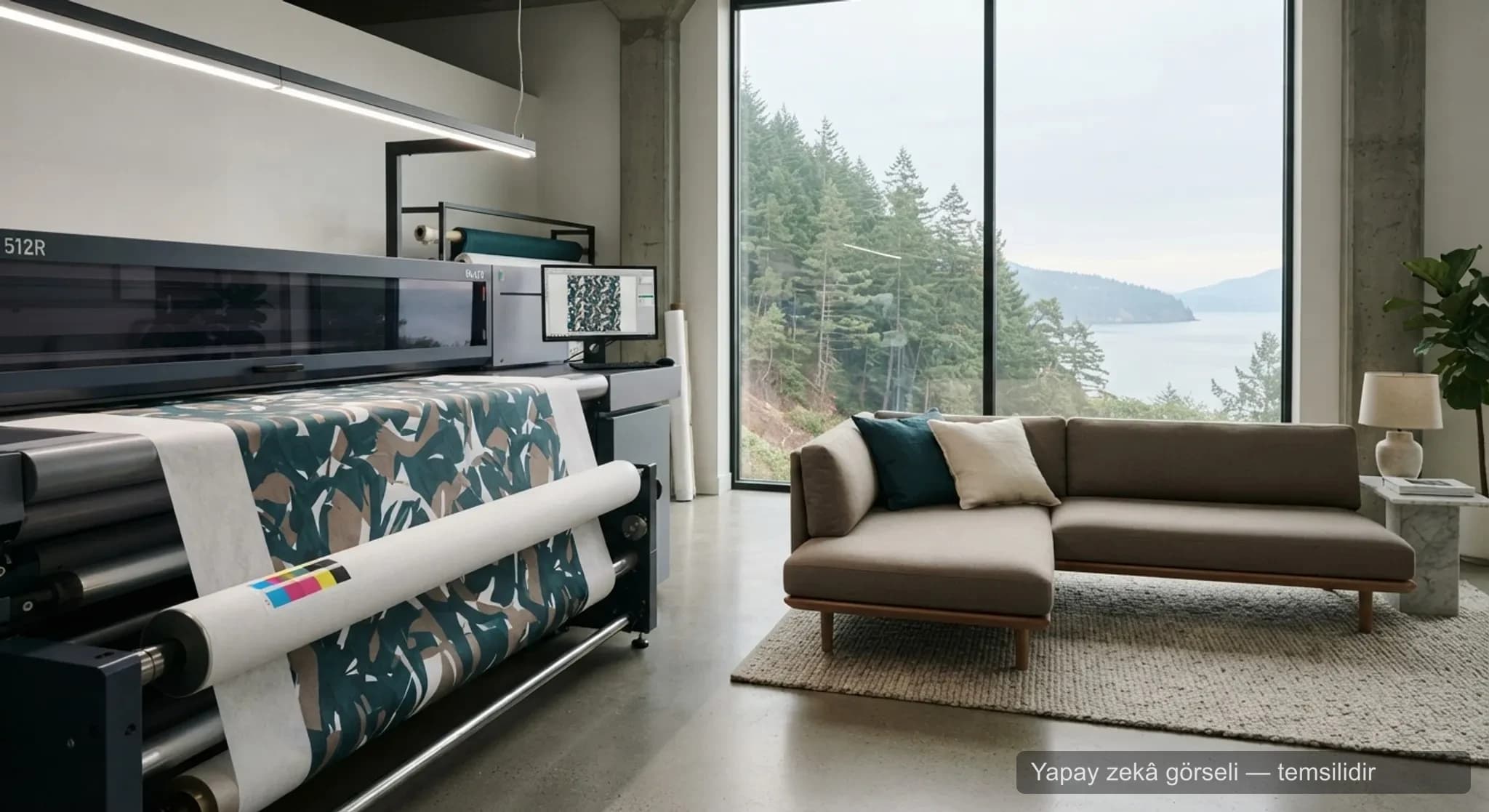
Industry 4.0 in Home Textiles: Smart Manufacturing Systems and Operational Efficiency
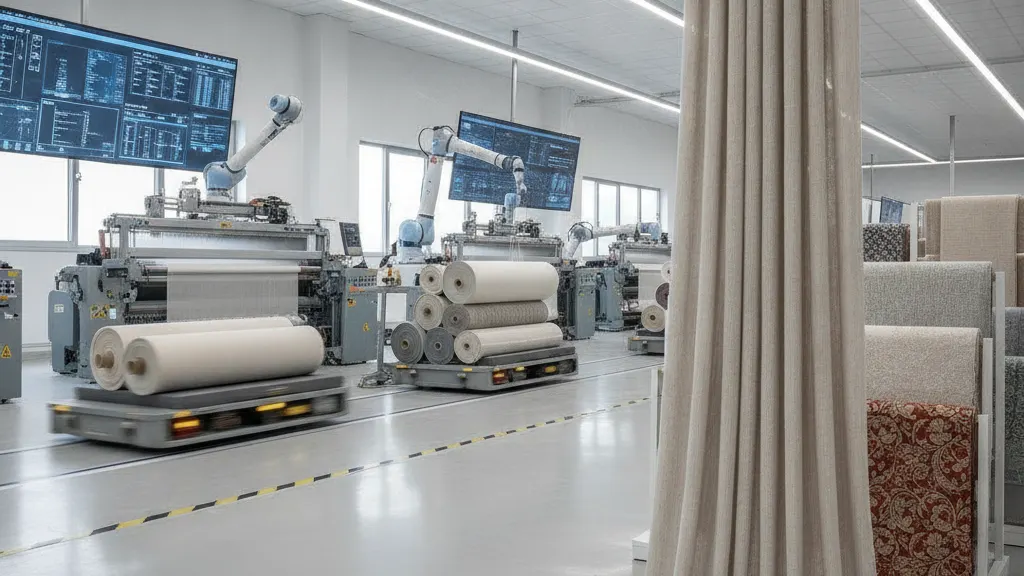
The convergence of IoT, AI, and digital twin technology transforms home textile and shading production. Turkish mills leverage smart manufacturing to compress unit costs and elevate global competitiveness.
The global home textile, curtain, and upholstery manufacturing sectors are undergoing a profound transformation driven by the innovations of the Industry 4.0 revolution. Strategic capital investments in smart manufacturing architectures play a pivotal role in optimizing operational expenditure, elevating shop-floor throughput, and strengthening international competitiveness. Turkish textile manufacturers are proactively embracing this technological transition to anchor an authoritative commercial standing across global markets.
In an era defined by accelerating digitalization and factory automation, the home textile sector is shedding conventional manufacturing paradigms in favor of agile, responsive, and data-driven infrastructure. This holistic metamorphosis extends beyond physical shop-floor processes, reshaping upstream supply chain coordination, predictive inventory control, and downstream client collaboration, unlocking unprecedented growth opportunities for agile enterprises.
Integrating Cyber-Physical Systems Across Home Textile Manufacturing
At the technological foundation of Industry 4.0 lies the synergistic synthesis of artificial intelligence (AI), machine learning algorithms, the Internet of Things (IoT), and advanced big data analytics. Integrating these cyber-physical frameworks across textile fabrication yields immediate gains in precision and resource utilization from computer-aided styling to final finishing. For example, IoT acoustic and thermal vibration sensors embedded within looms and finishing stenters monitor mechanical performance in real time, detecting micro-anomalies to execute predictive maintenance before costly operational shutdowns occur. Simultaneously, automated robotic handling systems across material transfer lines curtail labor overhead while dramatically suppressing defect rates, securing significant cost optimization across high-volume contract weaving mills.
Furthermore, digital twin simulations of physical production lines empower technical teams to model complex weaving parameters virtually, accelerating new product development cycles and pre-emptively resolving tension or yarn breakage bottlenecks before committing physical loom capacity. This capability provides unparalleled flexibility and speed, particularly when engineering bespoke contract draperies and intricate jacquard upholstery. High-value functional innovations—such as motorized shading mechanisms and sensor-embedded technical textiles—represent immediate fruits of this digital integration, catering directly to commercial buyers seeking building energy efficiency and automated solar heat management.
Historically characterized as an intensive labor-dependent craft, the textile industry is fundamentally evolving into a capital-intensive, high-technology domain. This structural pivot offers Turkish manufacturers a decisive competitive edge over competitors situated in high-wage economies. Through automated computer-vision inspection and closed-loop process automation, human error is virtually eliminated, establishing flawless batch-to-batch standardized consistency.
Global Market Trends and Strategic Openings for Agile Mills
The global propagation of building automation protocols and consumer enthusiasm for connected living environments are fostering compelling demand trajectories across soft furnishings and architectural window coverings. Discerning institutional procurers and retail consumers no longer seek purely decorative fabrics; they demand intelligent, remote-controlled shading solutions that integrate smoothly into building management systems while delivering measurable energy conservation. This evolving demand landscape compels textile leaders to accelerate applied R&D and digital technology adoption.
- Strategic Pillar 1: Mass Customization and Batch Agility: Industry 4.0 platforms empower mills to execute bespoke client designs and short-run custom dye batches with the cost efficiencies traditionally reserved for mass production, unlocking high-margin niche contract segments.
- Strategic Pillar 2: Supply Chain Traceability and Transparency: Smart intralogistics and digital inventory architectures render raw material flows and finished goods fully transparent, curtailing warehouse carrying costs while drastically compressing customer delivery timelines.
- Strategic Pillar 3: Data-Driven Decision Architecture: Advanced analytics platforms extract actionable intelligence from streaming factory telemetry, consumer sentiment data, and international macro trends, empowering executive teams to execute proactive commercial strategies.
- Strategic Pillar 4: Eco-Efficiency and Sustainable Processing: Smart automated dosing and heat recovery systems optimize freshwater, dyestuff, and thermal energy consumption, aligning mill operations perfectly with stringent European environmental governance frameworks.
Technical Implementation Protocols and Connected Shading Frameworks
Implementing Industry 4.0 across home textile mills generally unfolds through the phased modernization of existing legacy machinery paired with the greenfield deployment of smart infrastructure. This trajectory requires the formulation of a comprehensive digital roadmap followed by the rigorous selection of interoperable hardware and industrial software suites. Standardized IoT edge sensors are retrofitted onto spinning, weaving, and inspection frames, streaming telemetry into secure cloud repositories where machine learning models optimize operational variables dynamically.
Particularly within window coverings, integrating brushless whisper-quiet tubular motors and wireless communication boards ensures that architectural shades interface natively with smart building ecosystems. Utilizing standardized international communication protocols such as KNX, Zigbee, and Z-Wave, motorized draperies synchronize effortlessly with central environmental management units, optimizing solar shading and thermal buffering. Moreover, robust industrial cybersecurity protocols represent an essential pillar of connected operations, safeguarding proprietary fabric formulas, digital design archives, and client commercial records from external vulnerabilities.
Strategic Conclusions and Forward Horizon for the Turkish Textile Industry
Industry 4.0 capital expenditures across home textiles, drapery fabrics, and upholstery represent far more than defensive cost-reduction measures; they constitute an offensive strategic lever to capture global market leadership and penetrate high-value international territories. The dramatic throughput enhancements, defect eradication, and mass-customization capabilities unlocked by cyber-physical systems are rewriting the competitive hierarchy of the international textile trade.
By executing synchronized digital transitions, the Turkish textile sector is primed to solidify an unassailable stature domestically and across export destinations. As Industry 4.0 innovations proliferate globally, forward-looking mills must perpetually allocate capital toward applied R&D, cultivate specialized engineering talent, and continually modernize digital enterprise architectures. Through these disciplined measures, the Turkish home textile and architectural shading industry will fortify its premier global position, achieving sustainable, value-driven expansion for decades to come.
The convergence of IoT, AI, and digital twin technology transforms home textile and shading production. Turkish mills leverage smart manufacturing to compress unit costs and elevate global competitiveness.