Curtain Giant Relocated from Istanbul to Doğubayazıt: 110 Employed, Exports to 28 Countries
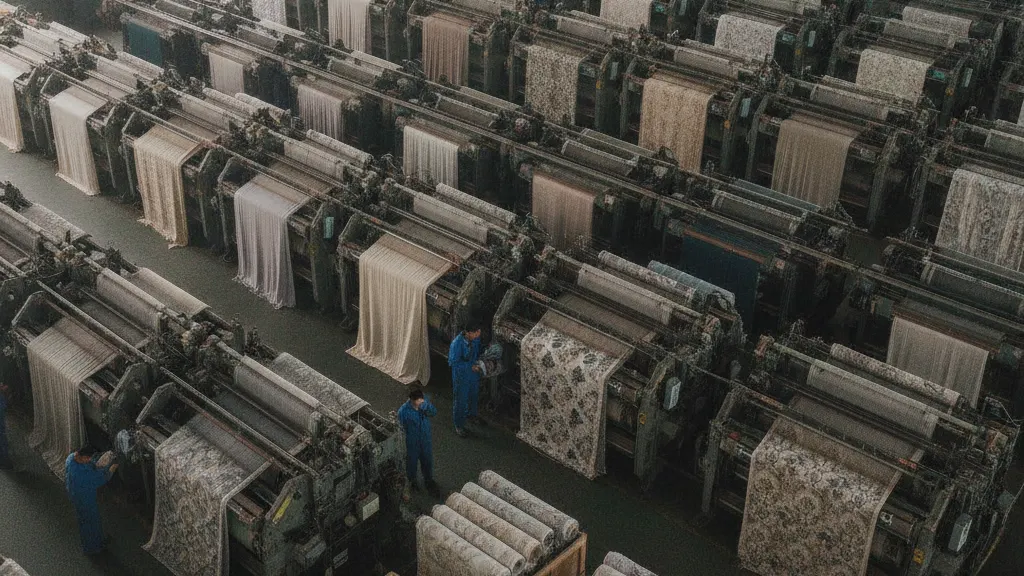
The relocation of a leading curtain factory from Istanbul to Doğubayazıt, Ağrı, creating 110 direct jobs and exporting to 28 countries, highlights the transformative power of regional investment incentives in Turkish manufacturing.
A transformative industrial success story is unfolding within the Turkish home textile and curtain fabrication sector. In 2021, an established curtain manufacturing enterprise executed a strategic relocation of its entire production operations from metropolitan Istanbul to the Doğubayazıt district of Ağrı in Eastern Anatolia. Within a compressed timeframe, the facility has delivered substantial economic revitalization to the local regional ecosystem while establishing robust export channels into premier global markets. Official corporate disclosures confirm that this strategic relocation currently provides direct employment for 110 skilled personnel while shipping manufactured curtains to 28 distinct countries worldwide, fortifying Turkey's global export stature. This development illustrates the untapped industrial potential across Eastern and Southeastern Anatolia and underscores the substantial economic multiplier effects generated when national investment incentives are astutely leveraged.
Industry analysts underscore that targeted manufacturing investments of this magnitude do far more than create local employment; they decisively reinforce regional supply chains and pioneer agile industrial business models. De-densifying manufacturing away from congested metropolitan hubs like Istanbul into Anatolian provinces plays a pivotal role in optimizing operational expenditure, capturing unique border-adjacent logistical efficiencies, and realizing macroeconomic regional parity goals. For the home textile, curtain, and upholstery fabric industries, strategic geographical diversification represents a vital milestone toward scaling value-added production capacity and bolstering international price competitiveness.
Impact of Regional Incentive Frameworks on Curtain Manufacturing: The Doğubayazıt Model
The stellar commercial trajectory of the Doğubayazıt curtain facility is fundamentally anchored in Turkey's sophisticated regional investment incentive framework. The national incentive architecture categorizes designated investment zones according to socio-economic development indices, extending tailored structural subsidies to designated regions. Provinces such as Ağrı qualify for the highest tiers of public support under the Zone 6 (6. Bölge) framework. This incentive package includes corporate tax exemptions, state co-financing of employer social security premiums, subsidized credit interest allocations, long-term industrial land grants, and complete value-added tax (VAT) exemptions. Corporate filings verify that these robust fiscal mechanisms, combined with the strategic border-adjacent geography of the district, were instrumental in driving the relocation decision.
These subventions provide decisive incentives for industrialists by curtailing labor overheads, compressing capital expenditure amortization schedules, and opening expansive greenfield manufacturing parcels. The Doğubayazıt curtain facility exemplifies how government policy delivers tangible private-sector revitalization, dispersing industrial capacity across Anatolia to redress historic economic imbalances. Furthermore, establishing advanced manufacturing operations within Eastern Anatolia provides high-caliber employment opportunities for the region's dynamic young workforce, mitigating domestic brain drain. Textile trade leaders emphasize that this operational blueprint offers a compelling roadmap for peers across the home textile and decorative fabric sectors.
Digital Transformation and Global Market Penetration Workflows
The sustained expansion of the Doğubayazıt curtain manufacturing plant stems not merely from regional tax concessions, but equally from decisive capital allocations directed into operational technology. Official KOSGEB registry entries verify that the enterprise executed an extensive digital transformation overhaul, comprehensively modernizing shop-floor assembly protocols and elevating overall equipment effectiveness. Systematic industrial digitization has emerged as an indispensable requirement for securing competitive distinction and integrating smoothly into international contract networks. This targeted technology investment amplified manufacturing throughput, sharpened precision quality control, and accelerated the development of curtains fully aligned with rigorous global standards.
- Shop-Floor Process Optimization: Digital workflow monitoring identifies assembly bottlenecks and machine idle times in real time, dramatically curbing operational production costs.
- Omni-Channel Global Diversification: Deploying specialized B2B trade platforms and digital marketing infrastructures enabled the manufacturer to penetrate 28 export destinations across Europe, the Middle East, and Central Asia.
- Real-Time Order and Inventory Logistics: Computerized Enterprise Resource Planning (ERP) networks streamline purchase order processing, roll-inventory tracking, and bonded customs dispatches, maximizing overseas customer fulfillment scores.
- Algorithmic International Competitiveness: Automated cutting tables, computerized ultrasonic sewing systems, and data analytics allow the enterprise to outmaneuver international rivals in precision, speed, and unit pricing.
Sustainable Production Paradigms and Regional Socio-Economic Uplift
Modern international textile procurement increasingly prioritizes comprehensive sustainability metrics, encompassing environmental conservation alongside corporate social responsibility. The relocation and expansion of the Doğubayazıt curtain plant delivers illuminating benchmarks for fusing sustainable manufacturing with regional socio-economic uplift. Utilizing regional labor pools and domestic raw material supply chains minimizes overland transit requirements, reducing corporate carbon footprints while injecting vital capital into the local agrarian-industrial economy. Moreover, the KOSGEB-backed technological investments optimize electricity and raw material consumption, minimizing operational waste generation.
These industrial dynamics harmonize seamlessly with Turkey's overarching national industrial vision. The state prioritizes high-value manufacturing, export-led macroeconomic growth, and equitable regional industrialization. The Doğubayazıt curtain operation provides concrete proof that these macroeconomic objectives can be realized simultaneously. For other enterprises within the textile and home furnishings ecosystem, exploring similar emerging regions and leveraging Zone 6 incentives represents an extraordinary strategic horizon. By duplicating this paradigm, Turkey's home textile, curtain, and upholstery sectors can establish an integrated, resilient manufacturing network spanning across the entire national landscape.
Future Outlook and Strategic Projections for Turkish Textile Exporters
The triumphant operational record of the Doğubayazıt curtain enterprise yields immensely promising signals for the broader evolution of the Turkish textile industry. The coordinated utilization of top-tier regional incentives, targeted digital modernization grants, and aggressive international export targeting represent the defining pillars of sustainable competitiveness. Across the home textile, curtain, and upholstery fabric segments, enterprises that anchor operations in innovative design, technical performance fabrics, and certified environmental responsibility will command commanding market power on the world stage.
For Turkish textile industrialists, wholesalers, and export managers, this case study stands as an inspiring reference model for re-evaluating the investment potential of Anatolia while capitalizing on government co-financing. As comparable manufacturing initiatives proliferate across regional hubs, Turkey's textile exports will diversify geographically and scale up high-margin product categories. These strategic capital deployments not only fuel sustained economic growth, but equally generate invaluable social prosperity and civic stability, ensuring the Turkish textile industry remains extraordinarily resilient, adaptable, and globally dominant.
The relocation of a leading curtain factory from Istanbul to Doğubayazıt, Ağrı, creating 110 direct jobs and exporting to 28 countries, highlights the transformative power of regional investment incentives in Turkish manufacturing.