Confusion Around Blackout Curtain Ratings: Why the Industry Speaks Different Languages
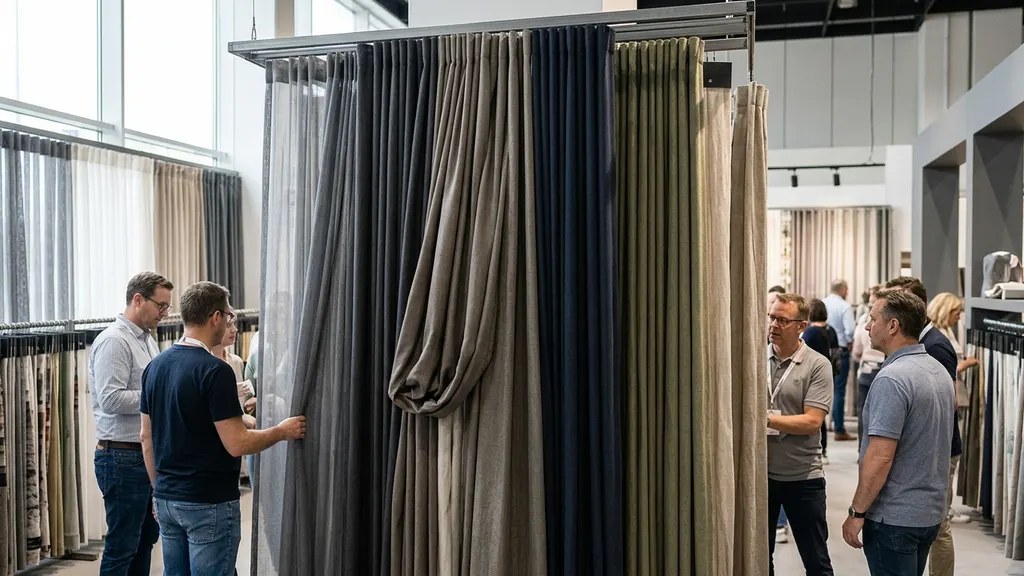
Discrepancies in blackout and dimout curtain percentages create friction in textile exports. The widespread perception of '90% blackout' must be reassessed against technical realities and international norms. Differences in color and weave density introduce significant testing variances.
Across the home textile, curtain, and upholstery sectors, a substantial gulf exists between the figures circulated in the trade regarding blackout and dimout drapes, international technical standards, and empirical realities. For Turkish weavers, wholesalers, and export houses, this ambiguity generates misaligned expectations domestically and compromises commercial standing across global contract tenders. Facing the exacting technical specifications and lab accreditation demanded by major European and Gulf hospitality projects, casual claims such as '90% blackout' prove wholly inadequate.
This operational friction requires industry stakeholders to rigorously define their product lines, structure technical submissions according to international norms, and actively manage client expectations. Recognizing that light attenuation is not a casual percentage claim, but rather rests upon formalized photometric testing protocols and global classification tiers, will elevate the stature of Turkish technical textiles across international projects.
Transmittance and Blackout: Inverse Counterparts
While the terms 'light transmittance' and 'blackout' are frequently conflated in conversational trade jargon, they represent diametrically opposed physical metrics. The foundational relationship is: Transmittance = 100 − Light Blocking. Consequently, a 90% blackout fabric permits 10% luminous transmittance, whereas a 99% dimout rating implies only 1% transmission. This technical distinction is paramount when interpreting foreign tenders. In an English-language tender document, a requirement stating 'light transmittance: 90%' specifies a sheer voile that allows 90% of incident light to pass, rather than what an informal Turkish vendor might misinterpret as 90% blackout. Such semantic confusion frequently precipitates contentious commercial disputes.
Colloquial terminology often reverses these definitions, whereas international testing protocols adhere strictly to luminous flux equations. This linguistic divergence highlights why mastery of exact engineering terminology is an absolute imperative for export-driven fabricators. Utilizing mathematically precise nomenclature forms the bedrock of accurate tendering and friction-free project handovers.
Why '90% Blackout' Falls Far Short of Professional Expectations
The colloquial claim of '90% blackout' widely tolerated in entry-level markets represents merely mediocre light-blocking performance rather than architectural dimout capability. Genuine technical dimout fabrics deliver substantially lower luminous transmittance and far superior light extinction. The table below illustrates standard photometric values across prevalent curtain constructions:
| Fabric Construction Type | Luminous Transmittance | Light Attenuation (Blackout) |
|---|---|---|
| Voile / Sheer | 40–80% | Minimal |
| Decorative Semi-Opaque Drape | 5–15% | 85–95% |
| Engineered Dimout | 0.5–3% | 97–99.5% |
| Coated Blackout | Near 0% | Near 100% |
Technical bulletins issued by premier German manufacturers such as Delius reinforce these findings: engineered dimout fabrics reduce natural light transmittance—which averages 40% in standard cloth—down to approximately 1%, achieving light attenuation in the 99% bracket depending on yarn colorway. Viewed through this technical prism, any drapery sold under the loose label of '90% dimout' is merely a semi-opaque decorative fabric. Mislabelling such goods exposes suppliers to contract rejections and severe warranty liabilities.
Global Standards: Empirical Testing Rather Than Arbitrary Percentages
Within the European regulatory framework, curtain optical performance is governed by the EN 14501 standard. Rather than reducing dimout to an arbitrary percentage figure, EN 14501 evaluates whether a textile permits perceivable light transmission under calibrated illuminance thresholds. The test protocol is precise: if no light transmission is photometrically detected when the face is subjected to 1,000 lux of incident illumination, the textile earns classification as 'dim-out'. When zero transmission is maintained even under intense illumination levels ranging between 75,000 and 100,000 lux, the material is designated as true 'blackout'.
Consequently, 'dimout' is an empirical test classification rather than an arbitrary arithmetic percentage. Formal European norms contain no definition stating that dimout encompasses a loose numerical range. Published percentage ratings typically stem from individual mill laboratory tests rather than standard-defined categories. This reality underscores why Turkish mills must support their global commercial proposals with accredited laboratory test certificates.
Color, Yarn Architecture, and Weight: Dynamic Drivers of Light Extinction
A recurring debate among converters is whether two fabrics woven with identical yarn counts and areal weights exhibit diverging blackout performance simply due to dye shade. The engineering answer is unequivocal: yes, color shade directly governs light-blocking performance.
- Dye Absorbs Light, Weave Blocks Transmission: Opacity results from the combined effect of yarn packing density and chromatic absorption. Saturated hues like jet black and navy blue absorb virtually all photons, whereas pale shades like ecru, cream, or light grey reflect light and permit diffuse photon bleed.
- White Yarns Scatter Incident Light: Within bleached or white yarns, incident photons undergo multiple internal reflections and diffuse scattering, illuminating the room even when no physical pinholes exist. This diffuse transmission occurs irrespective of fabric grammage.
- Optical Brightening Agents (OBAs): Fluorescent whitening agents applied to high-white yarns absorb ultraviolet wavelengths and re-emit visible light, creating an internal luminescence effect. This explains why stark white curtains fail to match the extinction metrics of darker colorways.
- Chromatic Light Bleed: Highly saturated colorways can tint transmitted light; for instance, a crimson curtain may block overall illumination while casting a distinctive red wash into the room, generating client dissatisfaction regarding interior ambiance.
- Black Weft Mechanics in Dimout: Classical triple-weave dimout relies upon a high-density black polyester weft core. As the outer face colorway lightens, the black core's opacity remains static, but surface reflection increases internal scatter, diminishing perceived room darkening.
- Pattern and Rotary Print Variables: In printed fabrics, regions featuring light ground areas allow localized light bleed. Even if average areal weight appears uniform, contrasting motifs can silhouette against window daylight.
For these reasons, quoting a single blanket blackout percentage across an entire color range is technically invalid. Mills should test darkest and lightest colorways independently and stipulate the rating of the lightest colorway in formal tenders, as commercial complaints invariably stem from pale shades.
Architectural Installation: Beyond the Textile Substrate
European standards assess the complete shading assembly rather than evaluating the textile in isolation. Profile engineering, track design, side-channel integration, and window clearances directly dictate final acoustic and optical performance. Even an absolute zero-lux blackout fabric fails if poor mounting leaves 20 mm perimeter light gaps. For high-end hospitality and healthcare applications, engineered cassette systems and channeled edge-tracks are mandatory. Promoting an installation as 'blackout compliant' without integrated system engineering risks costly post-handover claims.
Domestic Market Realities and the Export Imperative
Türkiye currently lacks a distinct domestic testing standard governing curtain blackout performance. While EN 14501 is acknowledged, formal compliance citations remain sporadic. Promotional literature frequently quotes inconsistent claims—such as 90%, 98%, or '100% light-proof'—without defining measurement methods, lux levels, or tested colorways. This reflects a scarcity of standardized technical documentation, where commercial marketing claims overshadow accredited laboratory reports.
For Turkish export mills, closing this technical documentation gap is imperative. Institutional tenders for hotels, hospitals, and residential towers across Europe and the GCC explicitly mandate certified test classifications and laboratory reports. A proposal citing an unsubstantiated '90% blackout' is promptly disqualified during technical review. To dominate international contract tenders, Turkish fabricators must implement four key practices:
- Differentiate clearly between luminous transmittance and light blocking across all data sheets.
- Always pair light-blocking percentages with the specific tested colorway.
- Attach accredited laboratory test certificates citing standardized lux thresholds.
- Explicitly demarcate fabric optical performance from overall system installation shading.
Adopting these four engineering principles will grant Turkish mills a formidable advantage over competitors who continue to rely on generic promotional claims. The future of technical textile manufacturing belongs to transparency, accredited engineering data, and alignment with global standards.
To consolidate its authority across international markets, the Turkish textile sector must resolve these terminology ambiguities, classify blackout fabrics according to recognized testing standards, and validate claims with certified lab data. This approach will establish enduring domestic trust and fuel sustainable export growth across global contract projects.
Discrepancies in blackout and dimout curtain percentages create friction in textile exports. The widespread perception of '90% blackout' must be reassessed against technical realities and international norms. Differences in color and weave density introduce significant testing variances.