2026 Bedroom Curtain Trends: Livingetc Analysis & Industry Impact
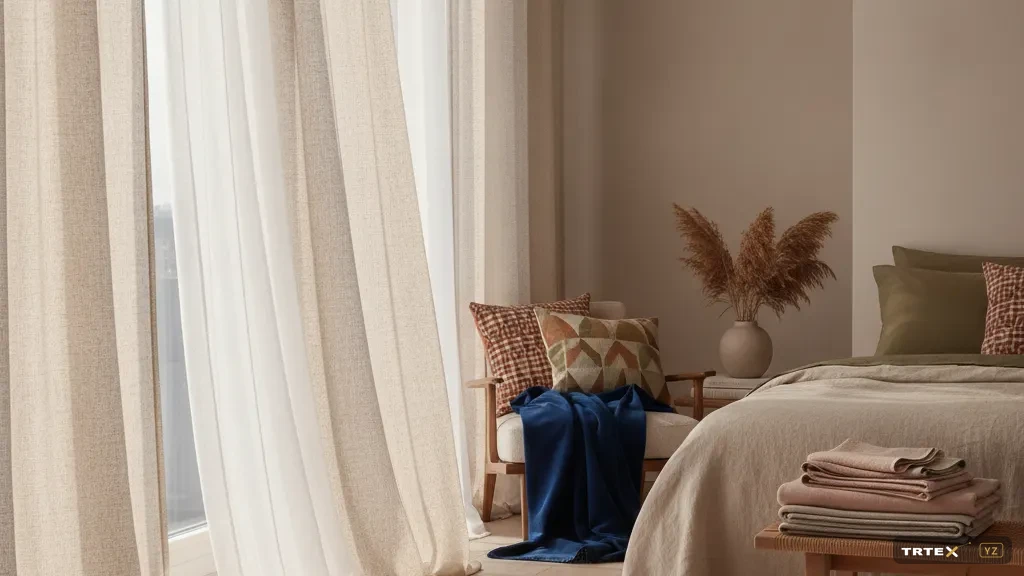
Trends within the home textile and curtain sector possess a dynamic structure that actively shapes global interior markets. Bedroom curtains hold exceptional strategic importance, as they must satisfy high aesthetic expectations while directly governing sleep quality and restorative rest. Livingetc magazine's comprehensive analysis of 2026 bedroom curtain trends provides crucial insights for contract specifiers and opens substantial export opportunities for high-end textile manufacturers.
Moving far beyond simple color and pattern forecasts, this industry analysis concentrates on functional fabric engineering, circular sustainability, and seamless integration with smart home automation. Forward-thinking textile mills are well-positioned to adapt rapidly through their flexible manufacturing and design capabilities. The soaring European demand for natural linen and delicate sheer curtains, coupled with the rapid rise of tactile bouclé textures in boutique hotel suites, mirrors these ongoing market evolutions. Adapting agilely to these shifts reinforces a mill's competitive strength on the world stage.
Balancing Functionality and Aesthetics in 2026 Bedroom Curtains
According to the Livingetc forecast, the most defining curtain trend of 2026 is the seamless union of technical performance and refined elegance. Modern consumers demand window treatments that deliver concrete lifestyle benefits alongside visual appeal. In this context, total blackout draperies have become indispensable for urban bedrooms. Engineered to deliver 100% room darkening for uninterrupted sleep, these curtains favor timeless architectural tones like deep navy, charcoal, and warm stone. Their light-blocking efficacy and colorfastness should be rigorously validated under international standards such as ISO 105-B02 to guarantee enduring performance.
Acoustic insulating curtains are similarly capturing widespread market attention. Mitigating urban noise pollution to create a tranquil bedroom sanctuary has become a primary wellness objective. This drives demand for heavy, sound-absorbing woven constructions and multi-layered jacquards. Textile manufacturers can capture premium margins by engineering proprietary acoustic weaves, certifying their noise reduction coefficients against established protocols like ISO 354.
Energy efficiency has also emerged as a decisive purchasing benchmark. Thermal insulated draperies curb winter heat loss to conserve building energy while deflecting scorching solar radiation during summer months to sustain indoor comfort. These performance attributes are powerful value drivers for eco-conscious homeowners. Thermal performance metrics, such as the overall heat transfer coefficient (U-value), should be transparently verified according to standard testing frameworks like ISO 9869-1.
Sustainability, Natural Textures, and Smart Motorized Systems
Across 2026 collections, sustainability serves as the foundational cornerstone for bedroom drapery. Curtains crafted from certified organic cotton, recycled polyester yarns, and European flax linen are eagerly sought after by environmentally aware buyers. Linen curtains continue to surge in popularity because their organic slub texture infuses interiors with warmth while their breathable cellular structure maintains a healthy sleeping climate. All eco-friendly claims must be corroborated by respected certifications such as OEKO-TEX Standard 100.
- The Ascendance of Pure Natural Fibers: Flax linen, long-staple cotton, and sustainable bamboo viscose lead specification lists for master bedrooms. Beyond their biophilic aesthetic, these fibers offer hypoallergenic and moisture-regulating qualities. Surging European wholesale orders for relaxed linen and airy sheers present a prime export growth vector.
- Intelligent Motorized Track Systems: With smart home ecosystems becoming mainstream, motorized and remote-controlled curtain tracks have evolved into modern symbols of functional luxury. Programmable scheduling, daylight lux sensors, and voice-command integrations elevate daily comfort. To secure lucrative hospitality and residential specifications, automated curtain systems must comply with international building control standards like ISO/IEC 14543.
- Double Layering and Versatile Filtering: Livingetc highlights layered window treatments as an enduring styling favorite for 2026. Pairing airy sheer curtains with heavyweight blackout drapes allows residents to modulate daytime natural illumination flexibly while achieving complete privacy and darkness at night.
- Serene Earthy and Botanical Palettes: Calming, restorative color stories lead the market. Warm terracottas, muted sage greens, misty slate blues, and soft alabaster creams cultivate an atmosphere of rest. Understated micro-textures take precedence over loud graphic prints.
Export Opportunities and Market Strategies for Textile Producers
Textile mills possess tremendous opportunities to capitalize on the architectural curtain trends highlighted by Livingetc. The pronounced European appetite for linen drapes and sheer voiles provides an ideal showcase for mills specializing in natural fiber spinning and fine-gauge weaving. Export metrics reflect the sector's quick adaptation to high-margin contract demands across the European hospitality sector.
Continuous innovation, rapid digitalization, and niche market specialization are essential to outperforming global competitors. Investing in domestic R&D for smart curtain motorized profiles, adopting closed-loop sustainable dyeing, and securing global certifications will expand market share. Concurrently, developing specialized textured upholstery lines for contract boutique hotels can unlock lucrative cross-selling opportunities.
Future Outlook and Actionable Industry Recommendations
The 2026 bedroom curtain trends signal that mills must evolve beyond conventional cut-and-sew operations into integrated providers of smart, sustainable window solutions. Global hospitality buyers and luxury retail buyers seek certified, eco-engineered draperies equipped for home automation. The industry is rapidly gravitating toward motorized tracks and sensory controls that fulfill consumer desires for effortless comfort and energy reduction.
By meeting and surpassing these evolving specifications, export-oriented textile mills will reinforce their international leadership. Active participation in global design trade fairs, direct engagement on B2B digital platforms, and strategic production planning informed by verified trend data are vital execution steps. Maintaining consistent compliance with international performance benchmarks (ISO, EN) will anchor long-term commercial trust.
TRTex Editorial Team
Prepared with AI assistance · TRTex AI
This content was prepared with AI assistance (EU AI Act 2024/1689, Article 50). Information with a source is given with a link to that source; if you notice incorrect or missing information, please write to us via the contact page.