ACADEMY ARTICLE
Fire Safety Standards in Home Textiles and Export Regulations
T
Author: TRTex Editorial Team
Published: 07 August 2026 · Last reviewed: 28 September 2026 · ⏱️ 3 min read
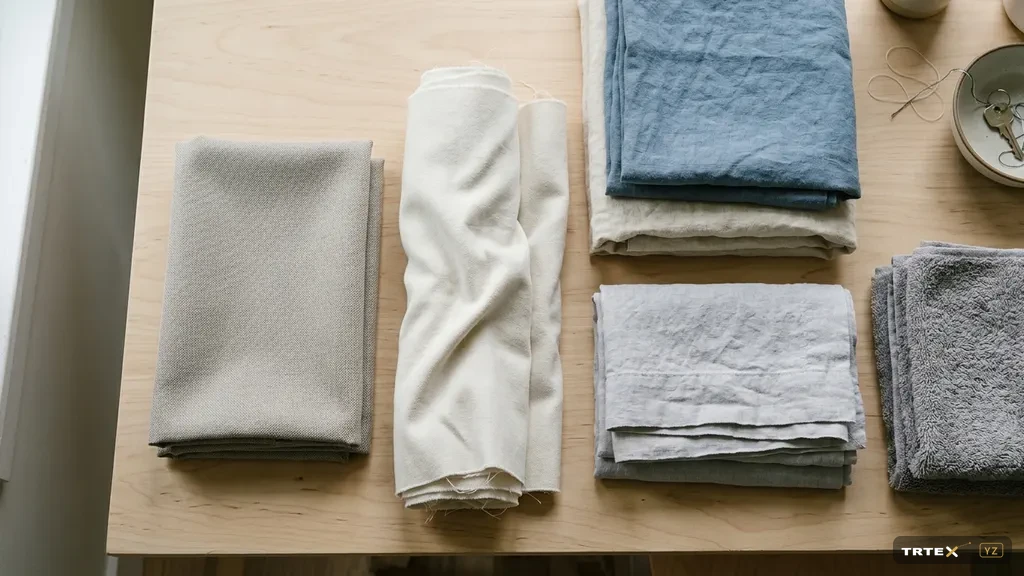
Fire Safety Legislation in International Target Markets
Building codes and fire protection statutes across export destinations establish diverse testing and classification requirements for indoor furnishings [1]. The flame-retardant performance of textiles specified in public buildings, hospitality facilities, hospitals, and educational institutions is governed by building occupancy classifications [1]. According to Turkish Ministry of Trade data, Turkey exported approximately 33 billion dollars of textiles and apparel in 2023, making technical standard compliance a critical export parameter [8].
In international procurement contracts, construction materials and decorative textiles are governed by distinct standards [2]. In the European Union market, standard EN 13501-1 establishes fire reaction classes from A1 to F for construction products [6]. For curtains and hanging decorative draperies, rather than EN 13501-1, European specifications require EN 13773 classification across Europe or national standards such as Germany's DIN 4102 B1, France's M1, and the UK's BS 5867-2 [2].
Testing Methods for Upholstery Fabrics and Bedding Assemblies
The ignition resistance of upholstered furniture is evaluated under differing standards depending on the country of destination and the interior setting [4]. Standard BS 5852 defines best-practice methods to assess the ignitability of fabric and filling combinations or complete seating units [4]. Across Europe, seating textiles are evaluated using a smouldering cigarette under EN 1021-1 and a match flame equivalent gas flame under EN 1021-2 as ignition sources [9].
In the UK market, standard BS 7176 serves as the primary benchmark for upholstered seating used in non-domestic and hospitality environments [10]. Within this framework, medium-hazard environments require testing with BS 5852 ignition source 0 and ignition source 5 [10]. UK national regulations also evaluate upholstery under BS 5852 parameters using butane flame ignition source 1 [7]. For bedding and sleep products, the EN ISO 12952 test series applies [3]. Within this series, ISO 12952-2 measures the ignitability of all bedding items when exposed to a match flame equivalent source [3]. In fiber technologies for upholstery, inherently flame-retardant products such as Trevira CS are widely specified [12]. Because flame-retardant properties are built directly into the fiber structure of Trevira CS, they do not wash out and remain unaffected by wear and aging [12].
US Market Regulations and Technical Compliance
For exports destined for the United States, standard NFPA 701 governs curtains and hanging draperies [1, 5]. NFPA 701 is the benchmark method measuring flame propagation of textiles and films under defined fire test conditions [5]. Under Chapter 8 of the International Building Code (IBC 2024), curtains, draperies, and decorative textiles suspended from walls or ceilings in occupancy groups A, B, E, I, M, and R-1, as well as R-2 dormitories, must meet NFPA 701 Test 1 or Test 2 criteria [1].
In the US upholstered furniture market, standard TB 117-2013 is recognized as a mandatory technical benchmark at the federal level [11]. Commissioning the appropriate accredited laboratory tests according to target market rules is essential for contract approval in commercial export projects [1, 10].
T
TRTex Editorial Team
Prepared with AI assistance · TRTex AI
This content was prepared with AI assistance (EU AI Act 2024/1689, Article 50). Information with a source is given with a link to that source; if you notice incorrect or missing information, please write to us via the contact page.
SOURCES & CITATIONS
- International Code Council (IBC 2024) (accessed: 2026-09-28) — codes.iccsafe.org ↗
- BSI (BS EN 13501-1 ürün sayfası) (accessed: 2026-09-28) — knowledge.bsigroup.com ↗
- ISO (accessed: 2026-09-28) — iso.org ↗
- BSI (accessed: 2026-09-28) — knowledge.bsigroup.com ↗
- NFPA (accessed: 2026-09-28) — nfpa.org ↗
- AB — Komisyon Yetki Devri Tüzüğü (EU) 2016/364 (EUR-Lex) (accessed: 2026-09-28) — eur-lex.europa.eu ↗
- legislation.gov.uk — SI 1988/1324 Schedule 5 (accessed: 2026-09-28) — legislation.gov.uk ↗
- T.C. Ticaret Bakanlığı (accessed: 2026-09-28) — ticaret.gov.tr ↗
- BSI (BS EN 1021-1:2014 ürün sayfası) (accessed: 2026-09-28) — knowledge.bsigroup.com ↗
- HM Government / Home Office — Fire safety risk assessment: sleeping accommodation (accessed: 2026-09-28) — gov.uk ↗
- ABD Tüketici Ürün Güvenliği Komisyonu (CPSC) (accessed: 2026-09-28) — cpsc.gov ↗
- Trevira GmbH / Indorama Ventures (üretici sayfası) (accessed: 2026-09-28) — trevira.de ↗