Belgian Coastal Architecture: Natural Tones in Textiles
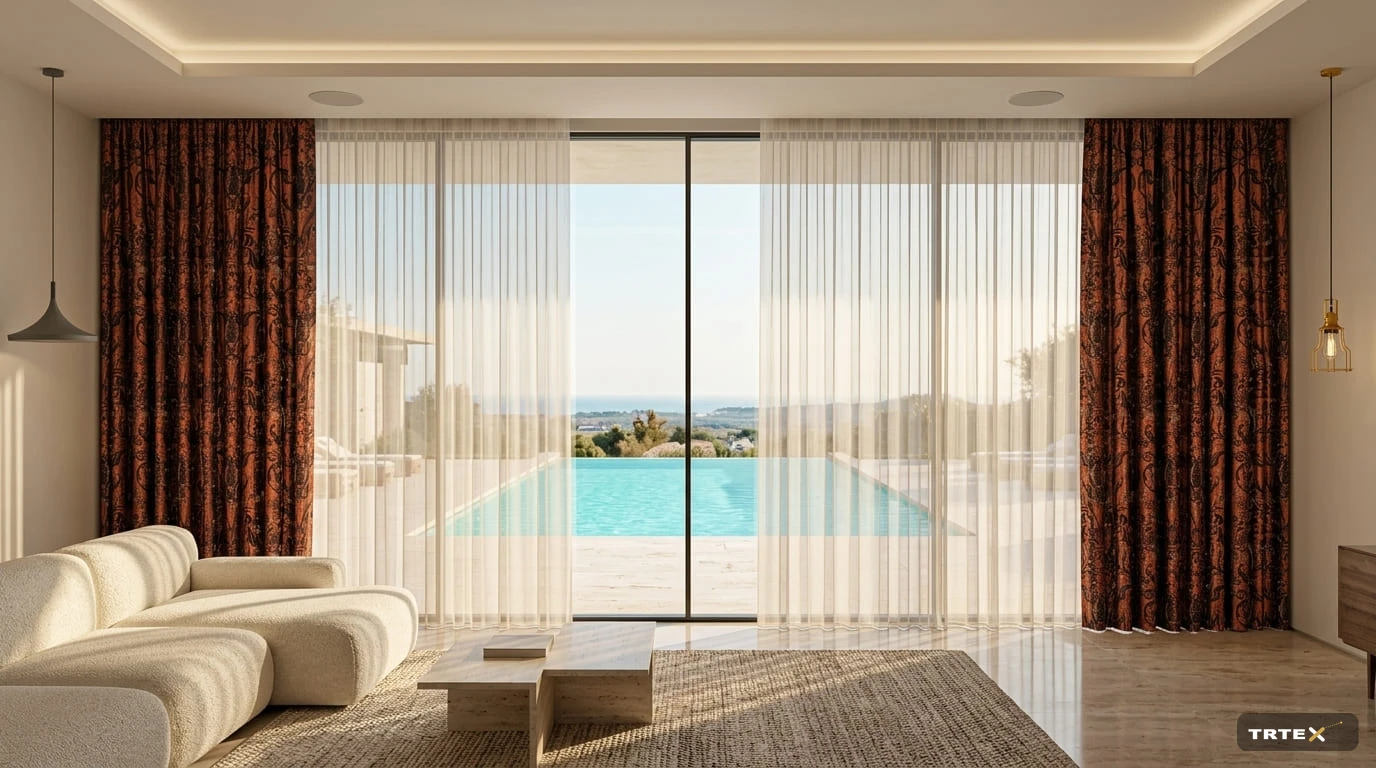
Belgian coastal architecture and V Penthouse in Duinbergen highlight sand palettes, coarse linen voiles, and motorized roller blinds for home textile exporters.
The "V Penthouse" project, realized in Duinbergen, one of Belgium's premier coastal towns, highlights the natural aesthetics steering Northern European interior design trends. According to Dezeen, this holiday residence designed by Antwerp-based Merckx-Holvoet Architecten draws direct inspiration from the characteristic sand dunes along the North Sea coastline. Spanning the ninth and tenth floors of the building, the penthouse creates an embracing, tranquil sanctuary. This architectural design language delivers strategic product development insights for Turkish manufacturers of drapery, sheer voiles, and upholstery fabrics exporting to European markets.
Core Architectural Analysis
In the spatial philosophy of the project, seamless integration of the exterior coastal panorama into the living space stands as the primary design directive. Merckx-Holvoet Architecten prioritize honest organic materials and a monochromatic palette of dune sand to envelop the interior without visual clutter. Such high-specification residential developments indicate robust growth in Northern European demand for minimalist textiles harmonized with the natural landscape.
For Turkish home textile exporters and upholstery mills, this prevailing design movement emphasizes three critical technical and stylistic requirements:
- Natural Textures and Linen Appearance: Heavy-textured, authentic linen-based or linen-look sheers and drapes play a pivotal role in expressing maritime minimalism.
- Earth and Sand Color Palettes: Upholstery fabrics rendered in beige, dune yellow, warm ecru, and delicate stone gray reinforce the cohesive monochromatic architecture.
- Motorized Window Integration: To optimize panoramic ocean views through floor-to-ceiling glazing, the architecture integrates minimalist motorized roller shade systems.
Conclusions and Strategic Recommendations
Across Northern Europe, particularly in Belgium and the Benelux region, market appetite for sustainable, organically textured, and premium textile furnishings continues to expand steadily. Turkish mills that enrich collection books with tactile raw weaves, natural fiber blends, and peaceful neutral palettes will secure enhanced specification rates across European architectural tenders. Specifically, prioritizing R&D into lightweight, stable fabrics engineered for motorized shading across expansive glass facades will establish a strong competitive advantage for our textile exporters.