Upholstery Colorfastness Thresholds: Dry 4, Wet 3 and 4 at 40 Hours of Light
Standard values to prevent crocking and light fastness complaints in upholstery fabric exports have been set in line with ISO and ACT criteria.
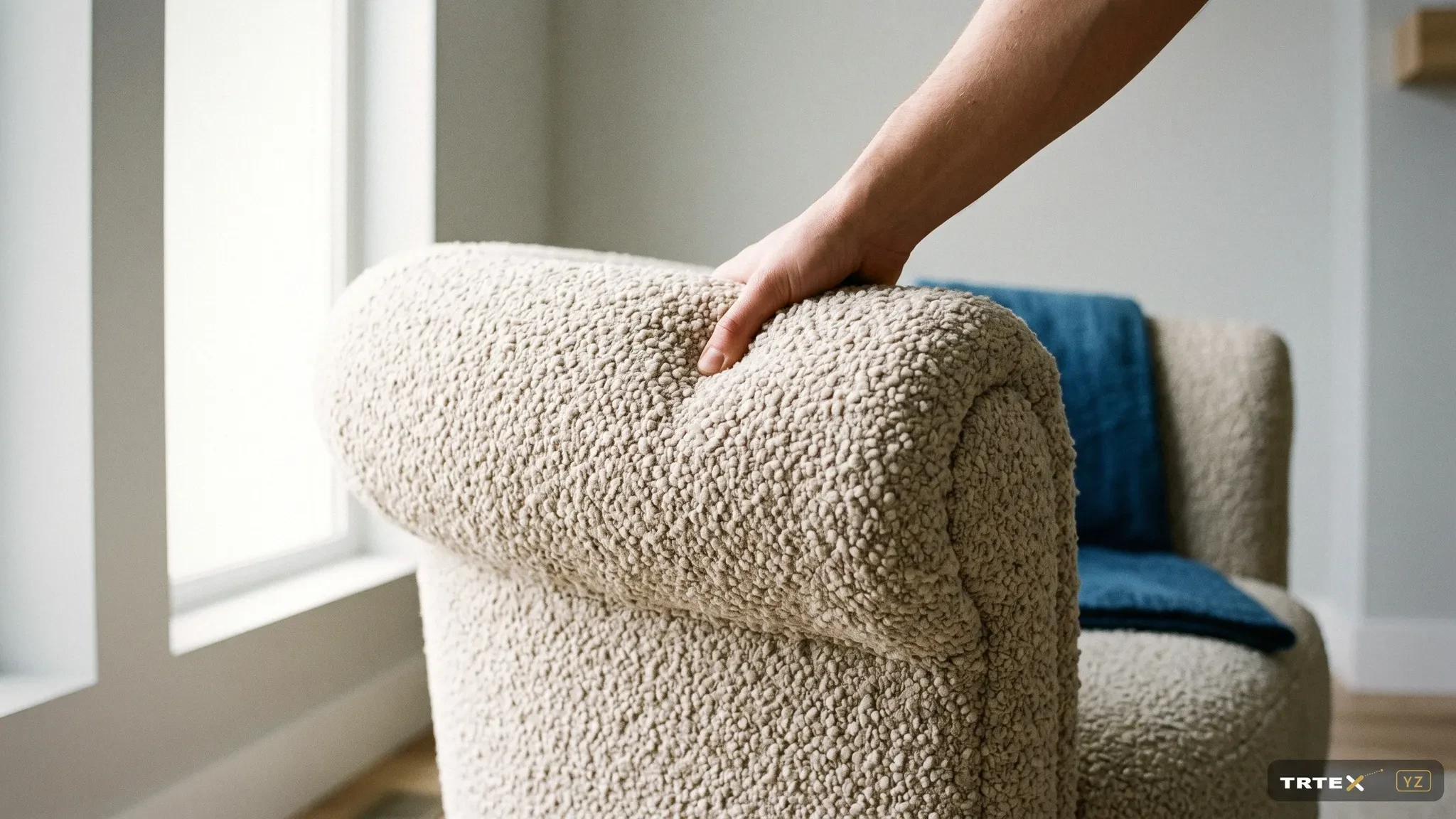
Among the most frequent customer complaints and return requests in upholstery fabric production and international contract supply are shortcomings in crocking and light fastness. On upholstery fabrics subject to intense mechanical contact on furniture and continuous daylight exposure near windows, dye shedding from the surface or colour fading is considered a direct quality defect. Meeting the technical criteria set by global buyers and contract textile projects is a key factor in preventing costly disputes and batch rejections after shipment.
Core Analysis
For the performance evaluation of woven upholstery fabrics, ISO 105-X12:2016 and AATCC 8 standards are used as references for crocking fastness. Under ISO 105-X12, testing is carried out in two separate stages, one with a dry crocking cloth and the other with a wet crocking cloth. The ACT Crocking Fastness Guideline, which sets contract textile standards in the United States, requires a minimum of Grade 4 for dry crocking and a minimum of Grade 3 for wet crocking according to AATCC 8 for interior woven upholstery fabrics. A low wet crocking value increases the risk of dye transfer from upholstery fabric to garments, especially in humid environments and under contact with perspiration.
On the light fastness side, colour resistance to artificial light (xenon arc) is assessed according to ISO 105-B02:2014. The method of this ISO standard allows the use of two different blue wool reference sets during evaluation. Meanwhile, the ACT Light Fastness Guideline requires that interior upholstery fabrics reach a minimum of Grade 4 after 40 hours of exposure under AATCC 16.2 Option 1 or AATCC 16.3 Option 3. Performance below this limit leads to rapid fading of upholstery products in sunlit spaces and violation of project specifications.
- Dry crocking fastness: according to the ACT guideline, upholstery must reach at least Grade 4 in the AATCC 8 test.
- Wet crocking fastness: according to the ACT guideline, upholstery requires at least Grade 3 in the AATCC 8 test.
- Light fastness: according to the ACT guideline, at least Grade 4 after 40 hours of exposure; under the ISO 105-B02 test, the blue wool reference set is essential.
Why It Matters
Failure to meet these fastness thresholds in interior and contract projects results in fabric being returned before the end of its service life, exposing the manufacturer to compensation risks.
What Members Can Do
Three concrete steps that upholstery fabric manufacturers and exporters should implement to prevent quality complaints:
- Verify laboratory tests before shipment: Have production batches tested separately for dry and wet crocking according to ISO 105-X12 at an accredited laboratory.
- Meet the minimum thresholds in the contract specification: For upholstery fabrics intended for export, secure minimum values of Grade 4 for dry crocking and Grade 3 for wet crocking under AATCC 8, and Grade 4 at 40 hours under AATCC 16.
- Audit blue wool and dyehouse fixation processes: Check the colour resistance of the fabric and the fixation parameters in the finishing stage against the two permitted blue wool reference sets under ISO 105-B02.
This content was compiled with AI assistance from the cited source. (EU 2024/1689 Art. 50)
Background: our earlier coverage
- Color bleeding in towel exports: 2 critical ISO tests buyers look for
We examine the ISO tests and internationally accepted grey scale limits that must be reviewed before purchasing to prevent color bleeding risks in towel exports.