Capacity and Market Trends in Global Home Textile Manufacturing: Overview
In-depth examination of capacity and emerging trends in the global home textile market. Competitive strategies, new destinations, and sustainability initiatives for Turkish mills.
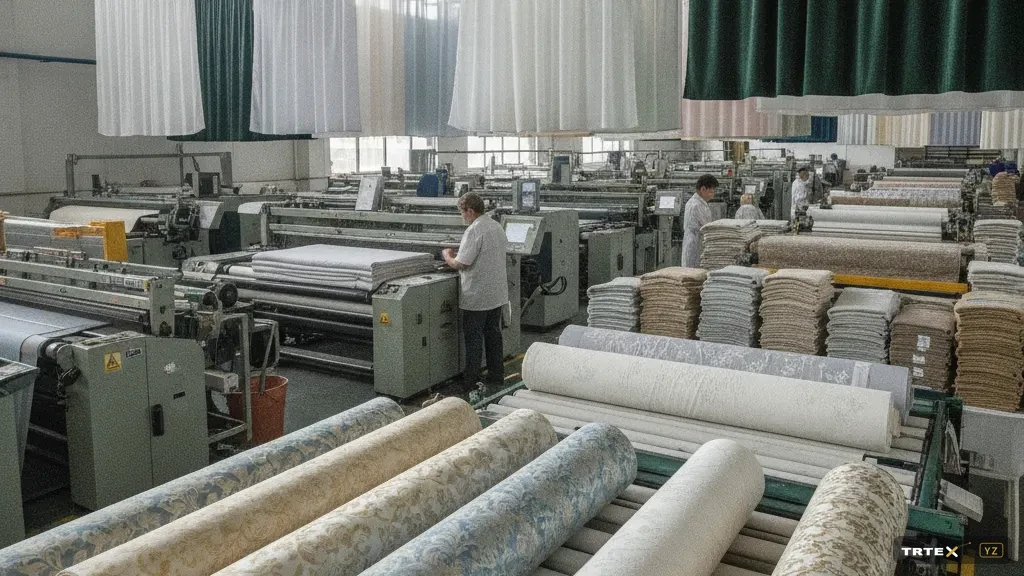
The global home textile industry is navigating a transformative period marked by macroeconomic fluctuations, supply chain reconfigurations, and evolving consumer preferences. Facing rising raw material quotations and energy volatility, manufacturers worldwide are actively optimizing capacity utilization and remodeling commercial strategies. In particular, unpredictable pricing shifts in global raw cotton markets generate uncertainty across spinning and home textile mills, directly impacting production costs. This article delivers a comprehensive analysis of global production capacity distribution, market trajectories, and Turkey's strategic position within this dynamic ecosystem.
Within this intricate global landscape, Turkish textile manufacturers encounter both structural headwinds and profound commercial opportunities. Demand saturation and competitive saturation across traditional European markets incentivize forward-thinking mills to pivot toward high-growth destinations in the Middle East, Africa, and the Americas. This diversification strategy possesses strong potential to reinforce export volumes and financial stability. However, navigating this transition demands decisive strategic commitments spanning capacity management, circular sustainability principles, factory digitalization, and cutting-edge product innovation.
Global Production Capacity and Inter-Regional Competitive Dynamics
Global manufacturing capacity in home furnishings remains heavily clustered within the Asia-Pacific territory. Nations such as China, India, Pakistan, and Bangladesh dominate global volume by virtue of expansive manufacturing footprints and low labor costs. Nevertheless, escalating labor expenses, tightened environmental regulations, and ongoing trade tensions have driven operational costs upward in these countries, prompting international buyers to seek alternative sourcing destinations. Consequently, noticeable purchasing orders previously placed in China are shifting toward Turkey, endowed with agile production structures and immediate geographic proximity to Europe.
While European Union member states excel in high-margin, design-intensive contract textiles, their raw production volumes remain limited compared to Asia. Turkey occupies a uniquely privileged status as an agile, dependable, and high-standard supplier located on Europe's doorstep. Widespread supply chain disruptions have firmly cemented 'nearshoring' and 'friendshoring' frameworks, amplifying Turkey's strategic indispensability. This macro-environment provides Turkish mills with an exceptional springboard to enhance capacity utilization and capture expanding market share.
Raw material volatility, particularly unpredictable price movements in virgin cotton, complicates industrial capacity planning. Climatic anomalies and supply chain bottlenecks continue to generate price swings, compelling manufacturers to pivot toward synthetic alternatives and recycled polyester filaments while restructuring supply contracts around long-term, flexible terms.
Market Trends, Consumer Demands, and Emergent Growth Avenues
Ecological sustainability has undeniably emerged as the defining megatrend across the global home furnishings landscape. Consumers increasingly favor textiles that are ethically manufactured, eco-certified, and incorporate post-consumer recycled materials. This demand requires manufacturers to overhaul processing lines, utilize certified organic fibers, and maintain verifiable, transparent supply chains. Turkish enterprises must align with this momentum by investing heavily in global certifications like GOTS and OEKO-TEX while publishing standardized sustainability disclosures.
- Digitalization and the Acceleration of E-Commerce: The rapid acceleration of digital commerce has permanently restructured distribution channels for home furnishings. Consumers now source draperies, bedding, and bath textiles seamlessly through online platforms. Mills must reinforce digital marketing architectures, develop intuitive B2B ordering portals, and integrate omnichannel platforms.
- Functionality and Multi-Purpose Engineering: Beyond aesthetic elegance, modern consumers demand high performance. Antimicrobial towels, stain-resistant tablecloths, and thermally insulated curtain fabrics enjoy robust market demand. Prioritizing R&D in performance-engineered textiles secures significant margin premiums.
- Customization and Bespoke Personalization: As personal expression takes center stage, buyers demand customized furnishings. Tailored draperies, personalized embroidery, and custom colorways offer immense commercial potential across premium niche segments.
- Targeting Emerging Markets: Turkish mills must venture boldly beyond European baselines into buoyant commercial corridors across the Gulf, North America, and Sub-Saharan Africa. Analyzing local demographics, cultural preferences, and purchasing power allows mills to engineer winning regional collections.
Technical Specifications, Quality Benchmarks, and Process Optimization
Strict adherence to international testing benchmarks is mandatory for penetrating high-value global trade circuits. European and North American retail groups enforce rigorous protocols regarding product safety, chemical restricted substance lists (RSL), and ecological credentials. Standards such as OEKO-TEX Standard 100, GOTS (Global Organic Textile Standard), and the EU REACH Regulation represent non-negotiable prerequisites. Turkish mills must subject internal workflows to regular third-party audits to ensure compliance.
Factory automation and shop-floor digitalization represent the definitive keys to boosting throughput efficiency and curbing unit production overheads. Intelligent manufacturing platforms minimize human error across inventory tracking, automated cutting, and visual quality assurance. Furthermore, investing in renewable energy and thermal recovery systems diminishes carbon intensity while insulating the enterprise against long-term energy price shocks. Building collaborative partnerships with academic R&D hubs and recruiting talented young engineers will accelerate this transformation.
Strategic Conclusion and Outlook for the Turkish Textile Sector
Current capacity reallocations and macro-trends across global home textiles present Turkish manufacturers with an inspiring balance of challenges and transformative opportunities. To maintain an enduring competitive advantage and deliver sustainable revenue growth, companies must execute bold, forward-looking strategies centered on green manufacturing, digital commerce, geographical diversification, and functional innovation.
Armed with strategic foresight and an innovative mindset, the Turkish textile sector will continue to reinforce its leadership standing across the global stage. The future will be built on accurate market intelligence, decisive execution, and robust commercial ecosystems.