Duvet Filling Standards: EN 12130 and EN 12934
A guide to answering buyer requests on duvet filling selection: EN 12130 fill power measurement and EN 12934 labelling rules.
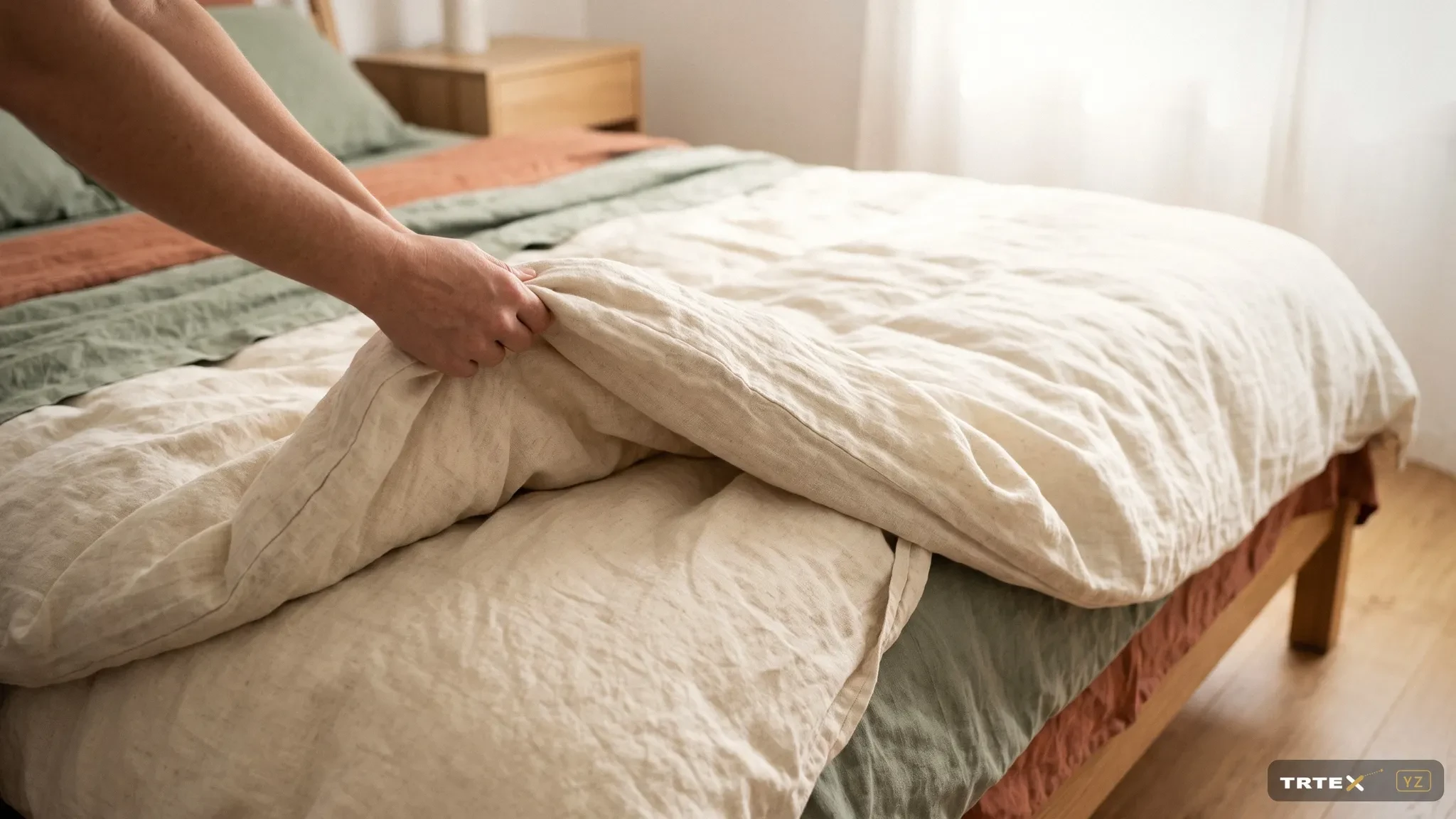
In the export of duvets and bedding textiles, the two main options most often compared by international buyers are synthetic fibre and natural fillings. In buyer discussions, presenting data based on technical standards instead of subjective comfort descriptions helps ensure that orders and specification processes proceed without errors. While synthetic fibre fillings offer ease of care and cost advantages, the performance of natural filling materials such as down and feathers is documented directly according to European standards.
Core Analysis
The key parameter that must be presented to the buyer in the production of natural down-filled duvets is fill power. SS-EN 12130:2018 defines a single test procedure for determining fill power, which specifies the bulk volume of down and feather filling materials. The fill power test clearly shows, through a defined procedure, the material's ability to recover after compression and to provide insulation.
The most current framework for filling composition and label declarations is set out in the SS-EN 12934:2025 standard. This standard defines provisions for labelling the down components used as filling materials and for declaring the poultry types from which those components are obtained (waterfowl or land fowl). Composition ratios and species descriptions in buyer technical specifications must be documented directly in accordance with the requirements of this standard.
- Fill power measurements should be confirmed with accredited laboratory reports fully compliant with the test procedure defined under SS-EN 12130:2018.
- In label declarations, the distinction between down composition and waterfowl or land fowl should be clearly stated in accordance with the provisions of SS-EN 12934:2025.
- For synthetic fibre filling requests, technical specifications and natural filling specifications should be managed in separate files in terms of test methods and labelling requirements.
Why It Matters
In the export market, non-standard label declarations can lead to shipments being rejected during customs inspections or buyer quality controls. Presenting transparent test results based on EN standards for natural-filled duvets guarantees manufacturers' compliance with technical specifications.
What Members Can Do
There are three concrete steps exporters and manufacturers should take:
- First, have the fill power of batches from natural filling suppliers tested according to the SS-EN 12130:2018 procedure and add the test reports to the technical file.
- Second, prepare duvet washing and product labels in full compliance with the component and bird type classifications specified in SS-EN 12934:2025.
- Third, when presenting synthetic fibre and natural filling alternatives to buyers, share the care, performance and standard test parameters of both options in a comparative technical specification table.
This content was compiled with AI assistance from the cited source. (EU 2024/1689 Art. 50)