ACADEMY ARTICLE
OEKO-TEX STANDARD 100: Criteria, Limits and 2026 Regulations
T
Author: TRTex Editorial Team
Published: 23 July 2026 · Last reviewed: 28 September 2026 · ⏱️ 3 min read
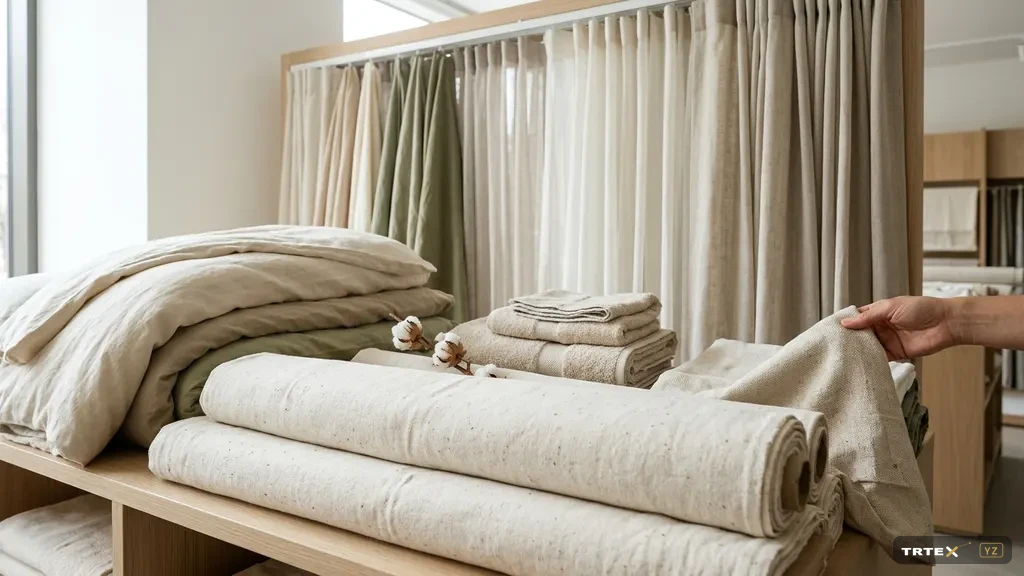
Core Criteria in Textile Safety and Testing Scope
OEKO-TEX STANDARD 100 is a global label demonstrating that textile products have been tested for harmful substances [1]. Encompassing all manufacturing stages from yarn to finished article, this framework requires that every component in the final product—including threads, buttons, linings, and zippers—undergo separate testing [1, 4]. To attain certification, laboratory measurements must verify that every harmful substance concentration remains below prescribed threshold limits [4]. The standard evaluates goods against an extensive list covering more than 1,000 regulated substances [1]. Criteria and limits are reviewed and updated at least once per year [1].
Under the 2026 regulatory framework, significant updates were enacted in the limit values catalog [2, 3]. The revised requirements took effect on 1 June 2026 following a 3-month transitional phase [2]. Through this revision, limits for bisphenol B, F, S, and AF compounds were lowered to 200 mg/kg, while a 20 mg/kg threshold was instituted for p-Anisidine [3]. The limit for arylamines cleaved from azo colorants stands at 20 mg/kg for each specific amine derivative [5].
Four Product Classes and Chemical Thresholds
The STANDARD 100 architecture classifies textile articles across four distinct categories according to intended use and skin contact intensity [4, 6]:
- Class I: Encompasses textile articles for babies and toddlers up to 3 years of age [6]. In this tier, formaldehyde content must remain undetectable under Japanese Law 112 testing, falling below 16 mg/kg [5].
- Class II: Covers clothing and household textiles with direct and extensive skin contact [4]. The upper threshold for free and partially hydrolysable formaldehyde is established at 75 mg/kg [5].
- Class III: Applies to products without direct skin contact [4].
- Class IV: Includes decorative textiles such as table cloths, wall coverings, furnishing fabrics, upholstery, and curtains [4]. The total limit for phthalate plasticizers is set at 500 mg/kg for Class I, II, and III items, while 1000 mg/kg applies to Class IV decorative goods [5].
Product pH parameters likewise vary by classification; Class I and II articles must maintain pH within 4.0–7.5, whereas Class III and IV articles permit a 4.0–9.0 range [5]. Prohibited brominated flame retardants are restricted to 10 mg/kg for each substance and a combined maximum of 50 mg/kg [5]. Color fastness to water must register at 3-4 for Class I and at least 3 for all other classes [5].
Certification Workflow, Audits, and Regulatory Alignment
Certification applications are submitted with representative testing specimens to an accredited OEKO-TEX institute selected by the producer [4]. Initial certification mandates an On-Site Visit at the manufacturing facility [4]. Certified facilities undergo site audits at least once every three years, supplemented by unannounced supervisory visits [4].
The issued STANDARD 100 certificate carries a validity of 1 year [6]. Producers retain the prerogative to submit renewal requests prior to expiration to maintain certification and labeling rights [4]. This framework is not a quality label; it represents voluntary documentation verifying that specific substances remain below stated thresholds [4]. Concurrently, it assists manufacturers in documenting alignment with Annex XVII and Annex XIV of EU REACH regulations, CPSIA statutes, and ECHA-SVHC candidate listings [1].
T
TRTex Editorial Team
Prepared with AI assistance · TRTex AI
This content was prepared with AI assistance (EU AI Act 2024/1689, Article 50). Information with a source is given with a link to that source; if you notice incorrect or missing information, please write to us via the contact page.
SOURCES & CITATIONS
- OEKO-TEX (accessed: 2026-09-28) — oeko-tex.com ↗
- OEKO-TEX (accessed: 2026-09-28) — oeko-tex.com ↗
- OEKO-TEX (accessed: 2026-09-28) — oeko-tex.com ↗
- OEKO-TEX (accessed: 2026-09-28) — oeko-tex.com ↗
- OEKO-TEX (accessed: 2026-09-28) — oeko-tex.com ↗
- OEKO-TEX (accessed: 2026-09-28) — oeko-tex.com ↗