Breakthrough Technologies in Home Textiles: The Future of Curtains and Upholstery
The global home textile industry is transforming through technological drapery and upholstery fabrics. Strategic innovations focused on sustainability and functionality present prime opportunities for Turkish manufacturers.
The home textile, curtain, and upholstery fabric industries are undergoing profound reconfiguration spurred by accelerating technological innovations worldwide. Heightened consumer expectations alongside escalating environmental consciousness compel mills to engineer smarter, more durable, and ecologically sustainable articles. In recent cycles, textiles delivering certified thermal insulation, air purification, self-cleaning photocatalytic surfaces, and smart-home system interoperability dominate corporate agendas. These advances open lucrative market horizons and substantial competitive differentiation for Turkish textile manufacturers, converters, and export houses.
This technological leap not only enhances utilitarian performance, but also dramatically enriches aesthetic vocabulary. Smart textiles are becoming integral components that directly elevate residential comfort and living standards, making it imperative for industry leaders to channel capital into targeted R&D. Given Türkiye's historic textile prominence and vast manufacturing scale, swift adaptation to these international trend vectors will prove instrumental in securing national export growth targets.
Breakthrough Innovations in Functional Performance Textiles
Contemporary engineered drapery and upholstery fabrics have evolved beyond purely ornamental roles into high-utility materials that deliver measurable economic value to interior environments. Climate-insulating fabrics in particular offer substantial potential to reduce residential energy consumption. Utilizing multi-layered constructions and proprietary weaving architectures, these textiles mitigate winter thermal dissipation while repelling solar heat gain in summer, balancing ambient interior temperatures. For instance, specific lines incorporate microencapsulated phase-change materials or metallic backing coatings for enhanced radiant reflection. Such technical innovations directly satisfy accelerating European demand for residential energy conservation.
Antibacterial and hypoallergenic textiles are likewise gaining immense commercial traction amid heightened sanitary awareness. Fabrics treated with silver ions, zinc oxide, or titanium dioxide nanoparticles suppress bacterial and fungal proliferation, sustaining hygienic indoor environments. Particularly favored across healthcare facilities, luxury hotels, and private residences, these solutions provide essential comfort for allergy-sensitive occupants. Furthermore, stain-resistant and easy-clean topographies answer pragmatic daily requirements, earning broad consumer acclaim. Nanotechnology-engineered coatings prevent liquid absorption, ensuring effortless maintenance.
Acoustic textiles provide vital solutions across increasingly congested urban environments. Engineered with dense weave topographies and specialized fibrous structures, these sound-absorbing fabrics dampen reverberation across commercial offices, home cinemas, fine-dining restaurants, and upscale residences to create acoustic sanctuary. Simultaneously, certified flame-retardant (FR) textiles represent an indispensable requirement as international life-safety codes tighten. Engineered specifically for hospitality, civic auditoriums, and transport sectors, these inherently fire-resistant materials protect lives and structural assets.
Market Trends and Commercial Opportunities for Turkish Textile Mills
Across the global home textile arena, environmental sustainability has emerged as a paramount commercial driver. Institutional specifiers and retail consumers actively favor products manufactured through closed-loop, eco-responsible processes incorporating certified recycled or organic feedstocks. Consequently, polyester textiles extruded from post-consumer rPET bottles and natural weaves crafted from organic cotton or flax linen command escalating market share. The Turkish textile cluster can substantially widen its international footprint by directing capital expenditures toward green R&D.
- Sustainable Manufacturing: Utilizing recycled polymers and certified organic fibers shrinks corporate carbon footprints while ensuring compliance with stringent regulatory frameworks such as the EU Green Deal. This commercial pull is particularly pronounced across Germany and Scandinavia.
- Smart Functional Textiles: Motorized window assemblies and upholstery integrated with ambient light, thermal, or humidity sensors offer tremendous growth runway across luxury residential tiers. Automated drapes adjusting to solar angles or upholstery balancing microclimates exemplify this trajectory.
- Digital Printing and Bespoke Agility: Industrial wide-format digital pigment printing unlocks unlimited aesthetic versatility, enabling cost-effective fulfillment of bespoke small-batch runs and personalized motifs without heavy tooling costs.
- Functional Minimalist Aesthetics: Merging technical performance with sophisticated tactile aesthetics remains vital. Pairing biophilic textures and minimalist palettes with high-performance characteristics creates compelling proposals for boutique hotels and luxury residences.
Technical Specifications and Mandatory Certification Regimes
Manufacturing engineered drapery and upholstery textiles mandates specialized metallurgical knowledge and disciplined process engineering. For example, insulating draperies require sophisticated multi-layer hot-melt lamination or vacuum-sputtered metallic backing technologies. For antimicrobial efficacy, active chemical complexes must be integrated directly into the polymer dope during extrusion or bonded permanently during wet finishing. Rigorous alignment with international testing protocols is mandatory for global market access.
Across Western Europe, compliance with OEKO-TEX Standard 100, REACH regulations, and GOTS (Global Organic Textile Standard) guarantees that articles are devoid of toxic residues. For flame-retardant contract lines, formal validation under European standard EN 13501-1 or US standard NFPA 701 is legally required. Turkish fabricators that complete these testing accreditations and align production lines with global benchmarks will secure an insurmountable competitive advantage. Dedicating resources to next-generation fiber research and plant modernization directly dictates long-term commercial triumph.
Future Outlook and Strategic Role of the Turkish Textile Industry
The trajectory of the home textile, drapery, and contract upholstery sectors will remain centered on the twin pillars of technical innovation and ecological sustainability. The mainstream proliferation of smart fabrics, expanding nanotech surface finishes, and the adoption of biodegradable synthetics will accelerate sector-wide breakthroughs. Turkish textile manufacturers possess all the requisite fundamentals to play a leading global role throughout this transition. Thanks to massive production volume, skilled technical labor, and geographic proximity to prime markets, Türkiye can establish itself as a primary global hub for engineered home textiles.
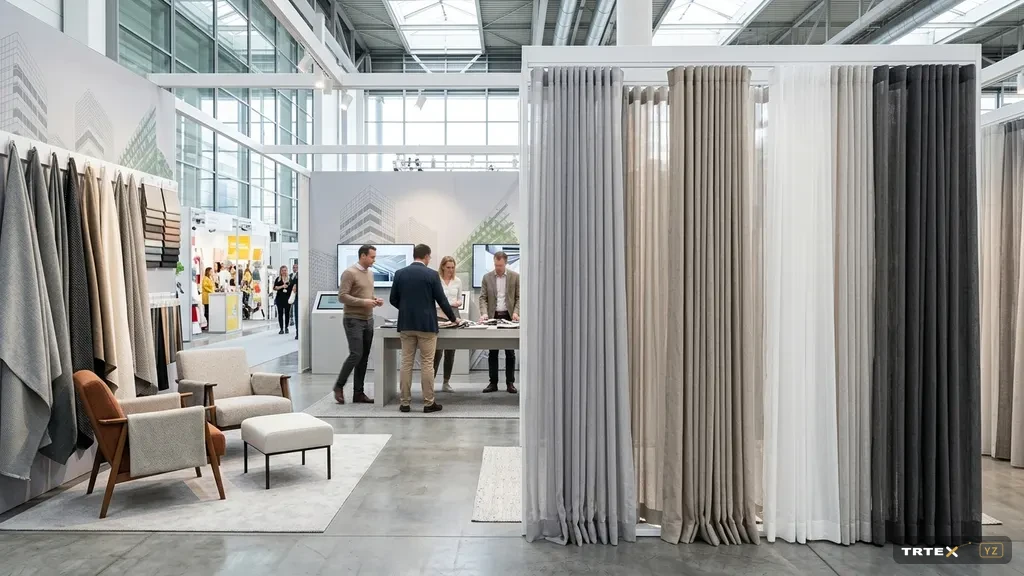
To capture greater international market share and solidify durable competitiveness, Turkish mills must sustain R&D investments, maintain active presence across tier-one international expos, and cultivate strategic partnerships via digital enterprise B2B channels. Specializing in high-value, engineered niche lines forms the cornerstone of future sustainable growth. Eco-centric, high-utility engineering will unlock new commercial frontiers domestically and across overseas export corridors, propelling Türkiye into the top echelon of global home textile leaders.
Background: our earlier coverage
- Upholstery Fabric Selection and the High-Tech Textiles of Tomorrow
Critical benchmarks for sourcing contract upholstery fabrics and navigating the technological breakthroughs defining the future of interior textiles. A strategic perspective for Turkish manufacturers.