Upholstery Fabric Selection and the High-Tech Textiles of Tomorrow
Critical benchmarks for sourcing contract upholstery fabrics and navigating the technological breakthroughs defining the future of interior textiles. A strategic perspective for Turkish manufacturers.
Serving as an essential cornerstone of the home furnishing and contract interior industries, upholstery fabrics undergo continuous evolution to satisfy both refined aesthetic expectations and rigorous utilitarian demands. Modern consumers and institutional specifiers no longer weigh visual allure in isolation; they systematically evaluate structural abrasion durability, cleanability, and certified sustainability. This operational reality compels Turkish textile manufacturers, converters, and export houses to calibrate product engineering and commercial roadmaps around these elevated technical benchmarks.
Specifying contract upholstery represents a critical engineering decision that directly dictates furniture longevity, ergonomic comfort, and interior acoustic ambiance. Across high-traffic hospitality suites, healthcare complexes, and residential developments, fabric performance is paramount. In this context, selecting the appropriate substrate secures end-user satisfaction while generating significant lifecycle cost efficiencies. Concurrently, technological breakthroughs in high-performance weaving are redefining the future of decorative soft furnishings.
Core Criteria Governing Upholstery Fabric Sourcing
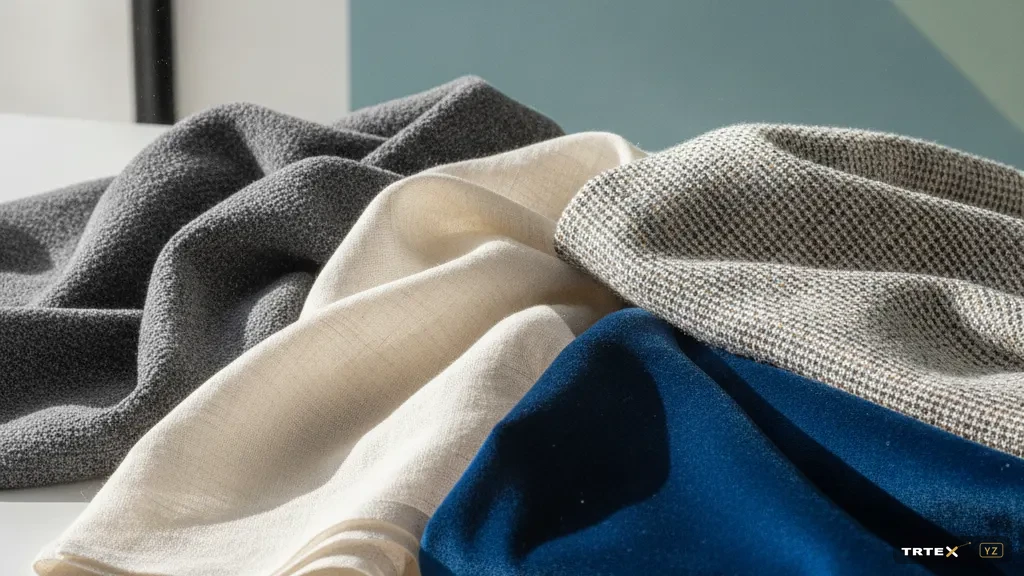
Evaluating commercial upholstery fabrics requires interrogating multiple technical parameters. Foremost, durability is of foundational importance for lifecycle longevity. Mechanical wear resistance is measured through standardized friction protocols such as the Martindale rub test; elevated cycle counts directly indicate prolonged service life. For example, residential applications typically require 15,000 to 25,000 rubs, whereas heavy-traffic commercial and hospitality installations mandate 30,000 cycles and above. Second, fiber composition directly governs mechanical performance. Natural fibers (cotton, linen, wool) confer breathability and premium tactile hand, whereas synthetic filaments (polyester, nylon, acrylic) deliver superior tensile strength, stain resistance, and lightfastness. Next-generation engineered fibers like microfibers and high-tenacity cellulosics offer lightweight, highly resilient functional topographies.
The third critical metric is cleanability and ease of maintenance. Across households with children or pets, alongside high-turnover hospitality dining, stain-repellent, wipe-clean textiles experience immense demand. Hydrophobic and oleophobic barrier finishings play an instrumental role in satisfying this requirement. Fourth, colorfastness denotes the textile's capability to preserve chromatic integrity against intense solar radiation, crocking, and commercial laundering. Choosing textiles engineered with high lightfastness ratings is vital for architectural furniture positioned in sunlit perimeter zones. Finally, tactile texture and pattern structure must harmonize with room acoustics and furniture contours. Weave density, yarn bulk, and pattern repeats directly influence aesthetic perception and dimensional stability.
High-Tech Upholstery: The Fabrics of the Future
The upholstery manufacturing sector is undergoing an enterprise digital transformation, populated by smart functional textiles engineered with responsive capabilities. This transition unlocks lucrative commercial vistas for Turkish mills, establishing strong competitive moats in international contract tenders. Tomorrow's upholstery substrates transcend decorative surface roles to deliver active contributions to user health and ambient comfort.
- Smart Functional Textiles and Sensor Integration: The integration of micro-sensors into upholstery fabrics allows furniture to actively interact with users. These textiles can monitor ergonomic seating posture, regulate thermal microclimates, or capture health telemetry. Engineered for native compatibility with smart building management systems, these fabrics optimize residential energy management and occupant wellness.
- Self-Cleaning and Air-Purifying Surfaces: Nanotechnology-engineered self-cleaning fabrics utilize specialized surface chemistries to repel stubborn stains and break down organic odors. Photocatalytic mineral coatings neutralize volatile organic compounds (VOCs) and indoor pollutants under ambient light, actively purifying interior air quality.
- Circular and Post-Consumer Recycled Feedstocks: Accelerating environmental awareness drives soaring contract demand for upholstery woven from certified post-consumer rPET filaments or circular bio-based fibers. These substrates mitigate environmental degradation while aligning corporate procurement with ESG mandates. Alongside organic cotton, flax linen, and bamboo, responsibly managed renewable fibers command premium pricing.
- Antibacterial and Antiviral Topographies: Particularly across healthcare institutions, senior living facilities, and commercial transit hubs, fabrics imbued with permanent antimicrobial and antiviral properties raise sanitary defenses. Utilizing silver ion complexes or bonded quaternary ammonium finishes, these chemistries continuously suppress microbial colonization on contact.
Process Innovation and International Audit Standards
Industrial innovation across contract upholstery extends far beyond novel fiber chemistry; it mandates the rigorous optimization of manufacturing lines and strict compliance with international testing standards. Mills must certify fabrics against recognized ISO, EN, and ASTM standards governing flame retardance, Martindale abrasion, pilling resistance, and chemical safety. Across the European Union, uncompromising compliance with REACH chemical restrictions is indispensable for market clearance. Industrial digital pigment printing accelerates bespoke small-batch production while slashing wastewater effluent. Automated robotic cutting and precision automated stitching systems elevate floor throughput and minimize human error.
Furthermore, complete supply chain transparency and batch traceability have become baseline requirements among multinational furniture manufacturers and hotel procurement boards. Certifying verifiable provenance from polymer flake through finished bolt elevates corporate credibility. This documented transparency confers decisive leverage across sustainability-driven contract negotiations.
Strategic Outlook and Actionable Directives for the Turkish Textile Industry
Turkish textile fabricators must take decisive measures to master this structural transformation across contract upholstery and cement their leadership in the global arena. The expanding market share captured by Turkish upholstery mills across demanding European markets like Italy and Spain testifies to the cluster's engineering agility. Securing and compounding this momentum requires continuous capital deployment into technology and applied R&D.
First, corporate R&D expenditures should concentrate on engineering high-utility smart fabrics. Specifically, high-margin functional topographies—such as permanent stain-barrier, water-repellent, antimicrobial, and breathable constructions—hold tremendous potential to expand market share. Second, embedding verified circular economy principles into factory operations fulfills environmental accountability while satisfying the rigorous demands of next-generation specifiers; utilizing certified recycled and organic inputs represents an essential step. Third, allocating capital toward automation, sensorized looms, and digital workflows will drive manufacturing productivity while compressing unit costs. Finally, securing international certifications and testing accreditations will fortify institutional trust across overseas contract networks.
Possessing an extensive industrial heritage and massive production capacity, the Turkish textile sector has every capability to dominate the global high-performance upholstery market. By proactively tracking technological frontiers and delivering innovative, engineered solutions, Turkish mills will capture the full dividend of global market expansion. This will ensure commanding commercial authority across both domestic trade and premier export corridors.