OEKO-TEX Standard 100: Certification Guide for Home Textile Exports
For Turkish home textile exporters, OEKO-TEX Standard 100 serves as a vital passport validating product safety and driving export competitiveness across the EU. Recent chemical regulatory revisions, especially tightened limits on PFAS and azo colorants, necessitate immediate adaptations across manufacturing workflows.
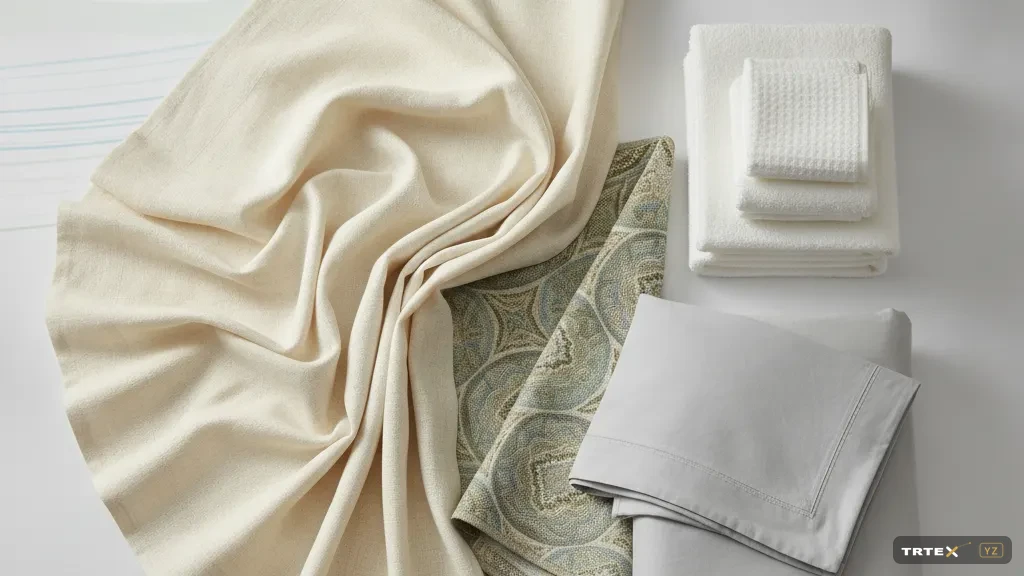
The Turkish home textile sector is undertaking resolute operational adjustments to satisfy international product safety and chemical compliance standards, cementing its market leadership across European Union (EU) territories. Within this regulatory environment, OEKO-TEX Standard 100 certification operates as an indispensable commercial 'passport,' validating that textile goods are completely free from substances hazardous to human health. Recently updated chemical restrictions and statutory compliance mandates have elevated the strategic importance of this certification for domestic fabricators.
Most notably, stringent restrictions regarding PFAS (Per- and Polyfluoroalkyl Substances) and carcinogenic azo colorants entering into force for 2026 mandate comprehensive modifications across bedding, curtain, and nursery textile categories. These mandates compel Turkish textile manufacturers to execute rigorous audits across raw material procurement and wet finishing operations. Achieving verified compliance not only fulfills legal market entry obligations, but directly safeguards institutional brand reputation and commercial buyer access across the European theater.
Strategic Value of OEKO-TEX Standard 100 in Home Textiles and Updated Chemical Thresholds
OEKO-TEX Standard 100 represents a globally recognized testing and certification architecture that evaluates textile products across all processing stages to verify the absence of chemicals harmful to human physiology. Because home textiles, draperies, and bedding maintain continuous direct contact with human skin in domestic habitats, rigorous alignment with these standards is essential. Recent parameters formulated by the International OEKO-TEX Association dramatically tighten permissible chemical thresholds across nursery and domestic furnishing lines, explicitly targeting PFAS compounds and restricted aromatic azo dyes.
As consumer health awareness and environmental vigilance intensify across the European Union, international certification has evolved from a voluntary marketing asset into an absolute trade prerequisite. Under updated procurement specifications, OEKO-TEX Standard 100 accreditation is legally mandated for institutional bedding goods. While a transitional period of 18 months has been granted to accommodate small and medium-sized enterprises (SMEs), all manufacturing entities must ultimately achieve total compliance. Given that home textiles represent a primary pillar of Turkey's foreign export revenue, these chemical updates necessitate structural enhancements in chemical inventory management and dyehouse protocols.
Beyond guaranteeing toxicological safety, adhering to these standards incentivizes meticulous factory-level monitoring of resource metrics, including water conservation and energy consumption. Surging European demand for verified ethical merchandise is accelerating capital allocations across Turkish dyehouses. Industry analysts confirm that Turkish exporters must secure international certifications—such as OEKO-TEX and GOTS—to maintain their competitive edge, providing an essential bridge of consumer trust across European distribution networks.
Practical Implementation Workflows and Step-by-Step Certification Strategies
While navigating the OEKO-TEX Standard 100 certification protocol may initially appear intricate, exporters can manage the process seamlessly through a disciplined, step-by-step methodology. Core operational steps include:
- Product Categorization and Risk Assessment: Manufacturers must first identify the precise OEKO-TEX Product Class applicable to their goods. While infant items (Product Class I) enforce the most stringent toxicology ceilings, home textiles (Product Class II) adhere to rigorous safety thresholds. Correct classification ensures accurate testing parameters.
- Supply Chain Audit and Chemical Inventory Compilation: A comprehensive chemical ledger must document every raw material component, auxiliary chemical, yarn, dye, zipper, and sewing thread utilized in production. Validated compliance declarations and Material Safety Data Sheets (MSDS) must be secured from upstream chemical suppliers, isolating banned azo colorants and PFAS formulations.
- Test Specimen Preparation and Application Submission: Formal application dossiers are submitted to authorized testing institutes (such as Hohenstein or Shirley). Test specimens must be prepared in strict accordance with laboratory guidelines, ensuring samples holistically reflect all fabric layers and trims.
- Accredited Laboratory Testing and Toxicological Screening: Designated independent laboratories screen submitted specimens against hundreds of regulated individual substances, encompassing heavy metals, pesticides, plasticizing phthalates, chlorinated phenols, and persistent PFAS compounds. Upon passing all laboratory thresholds, formal certification is granted.
- Annual Certification Renewal and Continuous Surveillance: OEKO-TEX Standard 100 certificates hold administrative validity for exactly 12 months, requiring annual renewal. Ongoing internal quality audits must confirm that interim dyehouse modifications or raw material substitutions remain fully compliant with original certification parameters.
- Transitional Timeline Provisions for Smaller Mills: Regulatory updates introduced by public authorities mandate OEKO-TEX 100 certification across public tender bedding goods, granting an 18-month transitional window. Smaller fabricators must utilize this grace period to adjust auxiliary chemical recipes and execute laboratory audits.
Technical Evaluation Parameters and Industrial Laboratory Protocols
The technical architecture of OEKO-TEX Standard 100 encompasses exacting analytical parameters and strict limit values. Permissible thresholds for cleavable carcinogenic arylamines derived from azo colorants are exceptionally rigorous. Simultaneously, total organic fluorine (TOF) and targeted PFAS compounds face near-zero tolerances due to bio-accumulative persistence and environmental longevity. Authorized testing laboratories employ sophisticated analytical instrumentations—such as Gas Chromatography-Mass Spectrometry (GC-MS) and Liquid Chromatography-Tandem Mass Spectrometry (LC-MS/MS)—to quantify trace contaminants down to parts-per-billion levels.
The standard administrative sequence entails completing formal technical questionnaires, submitting comprehensive bills of materials, conducting on-site factory quality management audits (where required), laboratory specimen drawing, and analytical testing. Once specimens verify compliance, the enterprise is granted official OEKO-TEX licensing rights, allowing the application of verified consumer trust labels onto product hangtags, packaging, and digital catalogs.
Operational execution demands that all technical teams thoroughly master the 2026 chemical revisions, embedding them across daily dyehouse routines. This requirement necessitates tight technical collaboration with chemical formulators, wet-processing houses, and finishing contractors. Continuous personnel training and rigorous internal batch testing are indispensable for sustaining unbroken compliance.
Industry Outlook: Anchoring Turkey's Prominence in Global Home Textiles
For Turkish home textile exporters, mastering the OEKO-TEX Standard 100 certification protocol represents far more than meeting an administrative hurdle: it embodies a decisive strategic advantage for capturing premium European market share. Heightened eco-consciousness across European retail channels ensures that verified consumer safety certificates command significant commercial preference. By aligning operations with these elite benchmarks, Turkish manufacturers simultaneously guarantee consumer wellbeing and reinforce brand equity.
Moving forward, international environmental regulations and consumer expectations will grow even more demanding. Consequently, the Turkish textile industry must institutionalize continuous compliance audits, accelerate green chemistry R&D, and implement closed-loop manufacturing techniques. These proactive measures will ensure that Turkey's home textile sector defends its global competitive supremacy, fulfilling ambitious long-term export growth targets.
Background: our earlier coverage
- OEKO-TEX 2026: Strict Regulations on Chemical Limits in Home Textiles
OEKO-TEX 2026 tightens limits on hazardous substances including PFAS and specific azo dyes in home textile products, aiming to safeguard consumer health and elevate environmental standards.