Stäubli TF20 for spacer fabric producers: 3D weaving trials in Germany
Stäubli has presented more than 15 years of 3D weaving expertise through its Bayreuth-based TWS unit, together with its TF series loom platform, offering manufacturers flexible industrialisation solutions.
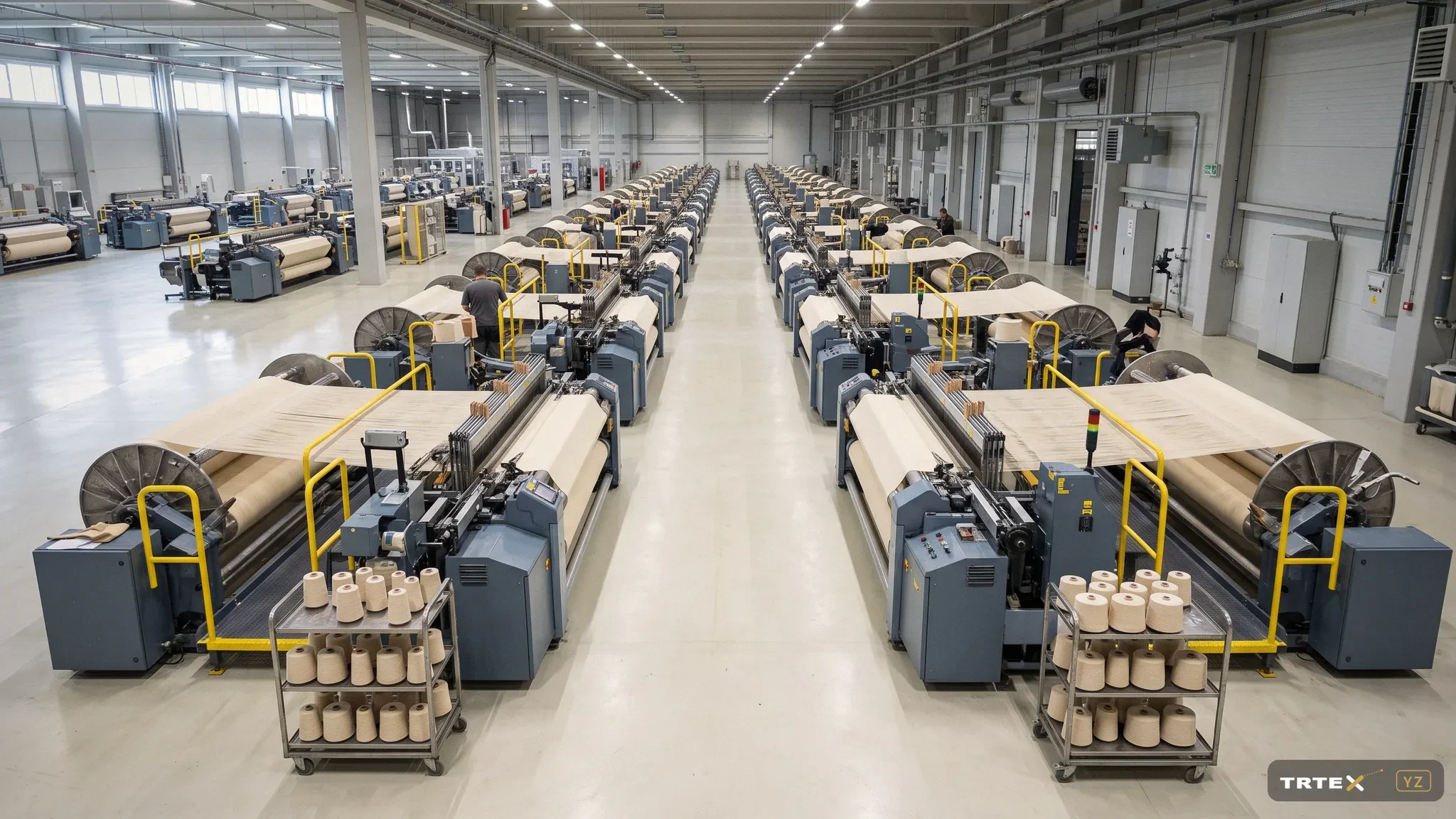
According to textile network, Stäubli has presented the global expertise of its Technical Weaving Systems (TWS) unit, which focuses on 3D weaving and advanced technical weaving solutions, together with its portfolio of TF weaving platforms. The company said it brings all 3D weaving processes, from R&D to industrialisation, under one roof at its competence centre in Bayreuth, Germany, and offers manufacturers flexible production options backed by more than 15 years of experience.
The machine portfolio highlights the high-speed TF20 model, which offers double weft insertion with contactless weft transfer for industrial composites and spacer fabrics. The TF30 and TF38 looms, which support both rigid rapier and shuttle technologies, are positioned to adapt to different material structures. For shedding, the LX2494 Jacquard machine is offered for the heaviest 3D loads, UNIVAL100 for complex technical structures, and the 4020 and 2688 heavy-duty dobby systems for demanding processes under high loads. Andreas Schnabel, Head of R&D at TWS, said that a single weaving platform gives manufacturers process stability and long-term flexibility as they move from the R&D phase to industrial production.
Background
The competence centre in Bayreuth houses application engineering, machine adaptation and in-house production capabilities, as well as a dedicated test centre that enables feasibility studies. Stäubli states that weavers can use this infrastructure while retaining their independence to develop their own processes and fabric architectures. The systems cover aerospace, defence, carbon fibre reinforced plastics (CFRP) and ceramic matrix composites (CMC), as well as high-strength industrial fabrics.
Why it matters
For traditional home textile, upholstery and technical fabric manufacturers, multidimensional fabric structures and spacer fabrics open up a path into technical segments with higher added value. Flexible loom configurations reduce the need to invest in a dedicated machine from scratch for every new fabric structure, helping manufacturers keep investment risk under control.
What members can do
Manufacturers developing technical upholstery and spacer fabrics can look into the feasibility and prototype development options offered by the test centre in Bayreuth. Long-term modernisation can be planned by assessing, within the existing machine park, the flexibility criteria offered by double weft insertion or heavy-duty Jacquard/dobby systems.
This content was compiled with AI assistance from the cited source — textile network (DE/EN — ev tekstili, Heimtextil çevresi). (EU 2024/1689 Art. 50)