Istanbul Chamber of Industry calls for a new medium-term programme at the 10th IFCO: prioritise support for production and exports
According to Textilegence, industry leaders at the 10th IFCO urged policymakers to formulate an export-centric Medium-Term Program (MTP) to defend global competitiveness.
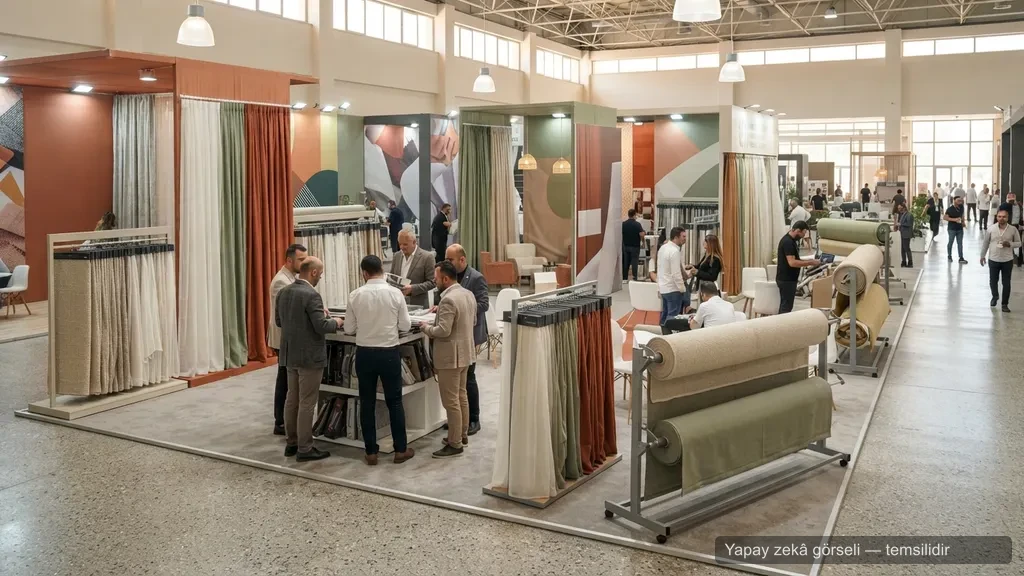
Opening its doors for its 10th edition, the Istanbul Fashion Connection (IFCO) hosted critical industrial deliberations regarding the prevailing economic landscape confronting the Turkish textile and ready-to-wear sector. According to Textilegence, the Minister of Trade and the Istanbul Governor presented comprehensive assessments of sector dynamics during the official opening ceremonies. Speaking at the assembly, Istanbul Chamber of Industry (ISO) Chairman urged policymakers to formulate a refreshed Medium-Term Program (MTP) that directly prioritizes manufacturing and outbound exports to preserve Turkish global competitiveness.
Core Analysis
The appeals articulated during the opening ceremony demonstrate that Turkish textile manufacturers require urgent structural underwriting amidst escalating factory overheads and contracting international buyer liquidity. For mills, converters, and wholesalers operating across high-value-added sectors including home furnishings, drapery, upholstery fabrics, and motorized shading systems, this macroeconomic orientation is paramount. Industry executives emphasize that transitioning the current economic environment into a durable growth trajectory demands accelerated deployment of state-backed incentives and industrial-friendly financial mechanisms.
This global realignment extends beyond domestic fiscal policy, mandating strict alignment with evolving international regulations. Notably, the European Apparel and Textile Confederation (EURATEX) has called upon European policymakers for a renewed EU Industrial Strategy pact to underwrite textile SMEs through decarbonization and digital transformation. In harmony with these global developments, Turkish home textile exporters must accelerate infrastructure onboarding for the Digital Product Passport (DPP), mandated by 2027 under the EU Ecodesign for Sustainable Products Regulation (ESPR). Sector strategists emphasize that finalizing these compliance protocols by June 2026 will secure decisive competitive leverage for Turkish exporters.
- Production and Export-Centric New MTP: To defend global market standing, industry leaders demand macroeconomic adjustments that mitigate factory cost burdens and establish export-oriented financing models.
- Digital Product Passport (DPP) Integration: To sustain seamless export access into the European Union, drapery and home textile mills must accelerate twin green-digital investments targeting June 2026 readiness.
- Technical and Antibacterial Manufacturing Investments: Overcoming sectoral contraction requires deliberate pivots toward high-margin technical textiles. The 85 million TRY investment by KTO Çarşaf ve Ev Tekstili A.Ş. in the Konya Organized Industrial Zone to establish a dedicated antibacterial medical sheet facility provides a stellar benchmark.
Conclusion and Strategic Recommendations
For the Turkish home textile, curtain, and upholstery fabric sector, the emerging era demands decisively abandoning commoditized manufacturing models in favor of high-technology, sustainability-driven production architectures. Alongside lobbying for national production-oriented MTP frameworks, manufacturers must prioritize capital investments in digital product passports to satisfy European Union standards. For exporters engaging international buyers via digital B2B trade platforms, finalizing technical textile certifications and eco-credentials represents the most dependable strategy to defend international market share over the medium term.
This content was compiled with AI assistance from the cited source — Textilegence (EN). (EU 2024/1689 Art. 50)