China, India and Pakistan: GSP+ and scale pressure rises for Turkish producers in EU market
China, India, and Pakistan expand global market dominance through capacity and vertical integration. Strategic supply shifts and implications for Turkish textiles analyzed.
In the global textile and apparel industry, Far Eastern manufacturing powerhouses—principally China, India, and Pakistan—are steadily expanding their international market dominance through colossal production capacities, raw material economies of scale, and vertical supply chain integration. According to industry intelligence sources, the combined export share of these three nations in global home textiles has reached a commanding threshold, directly shaping the procurement frameworks of premier European and American retail groups. This tectonic realignment presents Turkish home textile weavers, wholesalers, and exporters with both intensive price competition and sophisticated new avenues for strategic industrial collaboration.
This rapid Asian manufacturing ascendancy is driven not merely by competitive labor rates, but equally by sustained technological modernization, direct access to primary fiber sources, and proactive state industrial subsidies. Major transnational sourcing consortia and global retail conglomerates are forging long-term strategic partnerships across these nations to diversify supply disruption hazards. For the Turkish textile ecosystem, accurately evaluating these evolving balances is of paramount importance to defend and expand market share across international arenas.
Three Pillars of the Global Supply Chain: Structural Growth Dynamics
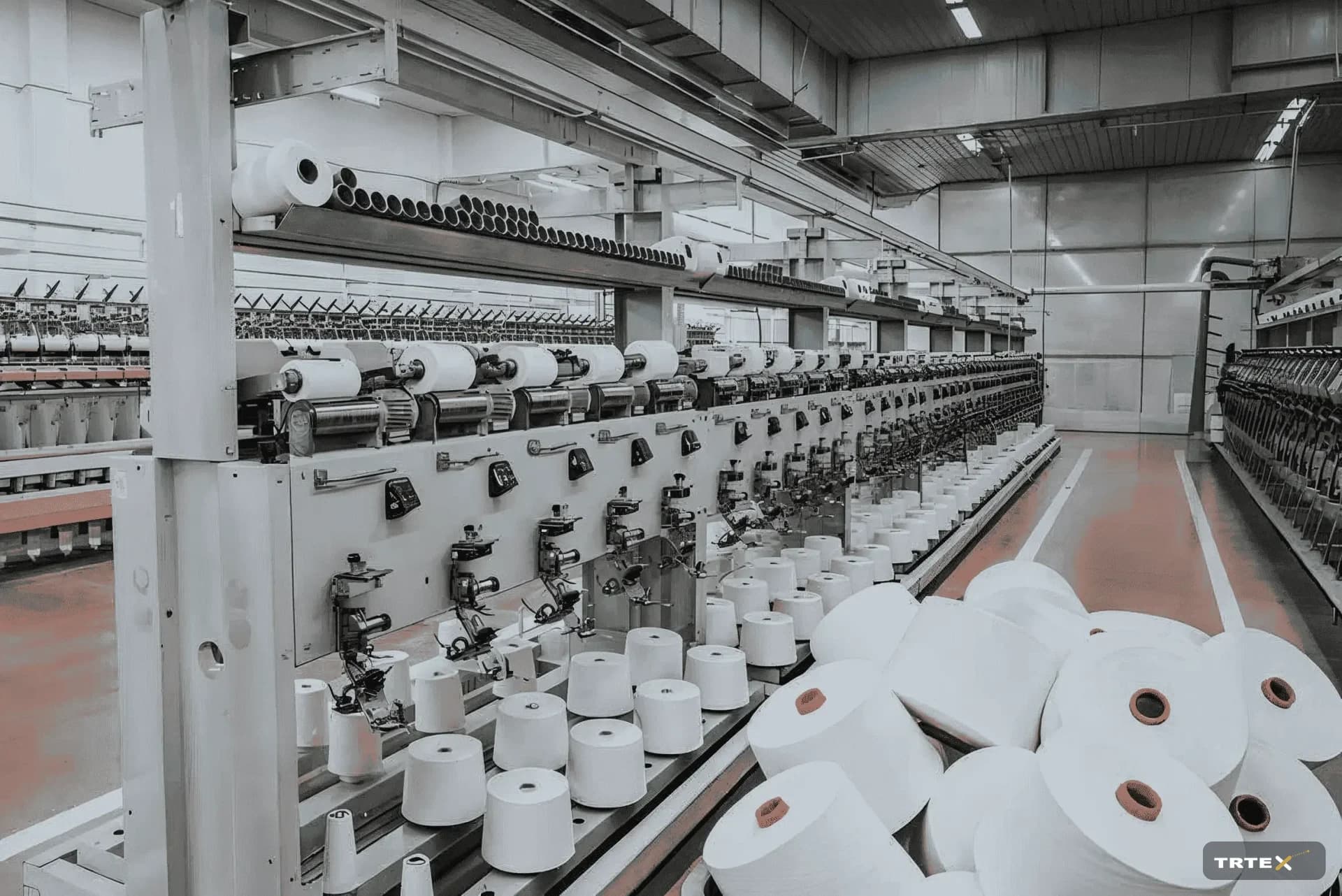
China preserves unquestioned leadership across home textiles and drapery through advanced automation systems and unprecedented manufacturing scale. In particular, dominance in artificial-intelligence-driven production planning, automated robotics weaving, and synthetic filament engineering reinforces the global market footprint of domestic powerhouses such as Luolai Home Textile. China's enormous economies of scale systematically compress unit production costs, securing immense competitive advantages in mass-market export bidding.
India distinguishes itself through organic cotton cultivation, premium staple fiber quality, and fully integrated vertical mills. Operating as a preeminent global home textile titan, India-based Welspun Group has established an unshakeable foothold across North American and European retail landscapes through sustainability-centric capital projects and end-to-end supply chain traceability. India's vast raw material reserves, coupled with design-intensive value-added textile capabilities, position the nation as an indispensable primary sourcing hub for multinational brands.
Pakistan captures prominent market share through hyper-cost-effective production concentrated in bed linens, terry towels, and essential household utility textiles. Leveraging its Generalized Scheme of Preferences (GSP+) agreement with the European Union to secure duty-free entry, Pakistan exploits this fiscal advantage to expand export tonnage. Nationally integrated textile flagships such as Nishat Mills have achieved international production benchmarks by directing massive capital into contemporary spinning and air-jet weaving technologies.
Global Brand Sourcing Strategies and Shifting Market Reallocations
To mitigate catastrophic operational dependencies on single-origin sourcing, multinational retail conglomerates have implemented the "China Plus One" supply chain diversification framework. Under this doctrine, global retail heavyweights including Sweden's IKEA and Spain's Zara Home are migrating substantial procurement allocations toward India, Pakistan, and nearshore manufacturing hubs. This migration intensifies rivalry among the three Asian titans while simultaneously propelling their domestic production standards upward.
- Technological Integration: Chinese manufacturers maximize industrial automation across digital printing and mechanical shading fabrication to compress order turnaround schedules.
- Sustainability and Certification: India targets uncontested global leadership in GOTS (Global Organic Textile Standard) certified manufacturing to satisfy European sustainability regulations.
- Tariff and Cost Arbitrage: Pakistan exploits duty-free GSP+ privileges to command compelling pricing advantages over Turkish exporters throughout the European single market.
- Design and Agility: To accommodate fast-moving collection lifecycles demanded by global brands, all three nations are upgrading specialized industrial design studios and R&D facilities.
Strategic Collaboration and Partnership Frameworks for Turkish Textiles
For Turkish home textile manufacturers, competing against these three manufacturing empires solely on unit pricing is an unsustainable proposition. Instead, forward-looking strategies must establish collaborative operating models that fuse the raw material and semi-finished cost benefits of Asian giants with Turkey's advanced design heritage, agile lead times, and logistical proximity to Europe. A potent model involves importing greige fabric or specialized yarns from Pakistan and India to process within Turkey's advanced dyeing, printing, and functional finishing facilities, yielding high-value finished collections.
Furthermore, establishing joint ventures with leading Far Eastern conglomerates to erect manufacturing or fulfillment hubs in Turkey represents a viable strategy. Such joint ventures afford Asian partners expedited, duty-efficient access to European and Middle Eastern contract channels, while guaranteeing Turkish manufacturers secure raw material supplies and lower blended production costs. Digital B2B trade platforms provide the essential infrastructure to incubate and scale these cross-border enterprise partnerships.
Operational Risks, Regulatory Hurdles, and Environmental Standards
Developing commercial integrations with Far Eastern suppliers requires strict risk-management governance regarding structural vulnerabilities. Chronic maritime freight volatility, protracted maritime transit intervals, and escalating container shipping costs constitute persistent operational liabilities for Asia-centric supply chains. Turkish manufacturers leverage geographic nearshoring to capitalize on these vulnerabilities across fast-fashion and just-in-time contract drapery segments.
Moreover, the European Union's Carbon Border Adjustment Mechanism (CBAM) and Green Deal mandates require comprehensive carbon footprint documentation across every manufacturing tier. The reality that many sub-tier mills across India and Pakistan have yet to satisfy stringent environmental thresholds presents compliance hazards for Turkish converters sourcing their gray goods. Consequently, collaborative initiatives mandate rigorous third-party auditing of upstream suppliers' social compliance and environmental credentials.
Future Projections and Actionable Takeaways for Turkish Mills
Looking ahead, China, India, and Pakistan will maintain commanding control over global textile production tonnage. For Turkish home textile and drapery mills, sustaining vitality within this macroeconomic arena requires abandoning commoditized production lines to focus aggressively on high-margin, innovative, and technical textiles. Smart automated roller shades, acoustic architectural drapery, and high-performance certified contract textiles represent the definitive arenas where Turkish weavers can outpace mass-market competition.
Ultimately, rather than misinterpreting the expansion of these Far Eastern titans as an existential threat, Turkish leadership must dissect their structural advantages to engineer reciprocal business models. Insofar as Turkish mills unite their design mastery and rapid European logistics with Asia's raw material scale, they will entrench their indispensable position within global supply networks and safeguard their long-term industrial future.
Background: our earlier coverage
- Polyester yarn costs rise in Surat, India: margins shrink for weaving mills
In Surat, India's major textile hub, surging polyester yarn prices forced weaving mills to voluntarily curtail loom operations, sending shockwaves across global supply chains.
- Where Does Turkish Textile Stand Amid the Ascendance of Vietnam and India?
As Vietnam and India expand their presence across global textile markets, this analysis evaluates Turkey's export positioning and competitive strategies, emphasizing the primacy of technical value-add over price wars.