Artificial Intelligence Transformation in Home Textiles: Implementation Guide from Producer to Retailer
Artificial intelligence (AI) adoption across the home textile supply chain is revolutionizing operations from factory floors to retail storefronts. This guide details practical applications and Turkish state incentive frameworks for manufacturers, wholesalers, and retail operators.
The global textile and home furnishings manufacturing ecosystem stands on the threshold of an epochal transformation propelled by the structural integration of Artificial Intelligence (AI) technologies. As articulated by Ergin Aydın, President of the All Textile and Apparel Manufacturers Association (TİHCAD), the global textile AI market valuation is projected to surge to $4.9 billion by 2026. This financial indicator vividly demonstrates the industry's soaring appetite and expansive capital allocation pipeline directed toward machine learning technologies. However, the fundamental strategic divergence is emerging between enterprises merely running superficial point-solution tests and forward-thinking industrial players that systematically embed artificial intelligence directly into core executive decision-making architectures.
The Turkish home textile, curtain, upholstery fabric, and technical shading sectors cannot remain detached from this transformative global pivot. Across every operational nexus—from parametric stylistic drafting and shop-floor manufacturing to automated supply chain orchestration and hyper-personalized customer interaction—AI delivers radical efficiencies, substantial cost rationalization, and decisive competitive leverage. This comprehensive analysis decodes the tangible industrial applications of AI across the distinct operational viewpoints of manufacturers, wholesale distributors, and retail operators, while identifying the vital government subventions engineered to finance this technological leap for Turkish enterprises.
Artificial Intelligence Deployments for Manufacturers: A Paradigm Shift in Shop-Floor Efficiency and Quality Control
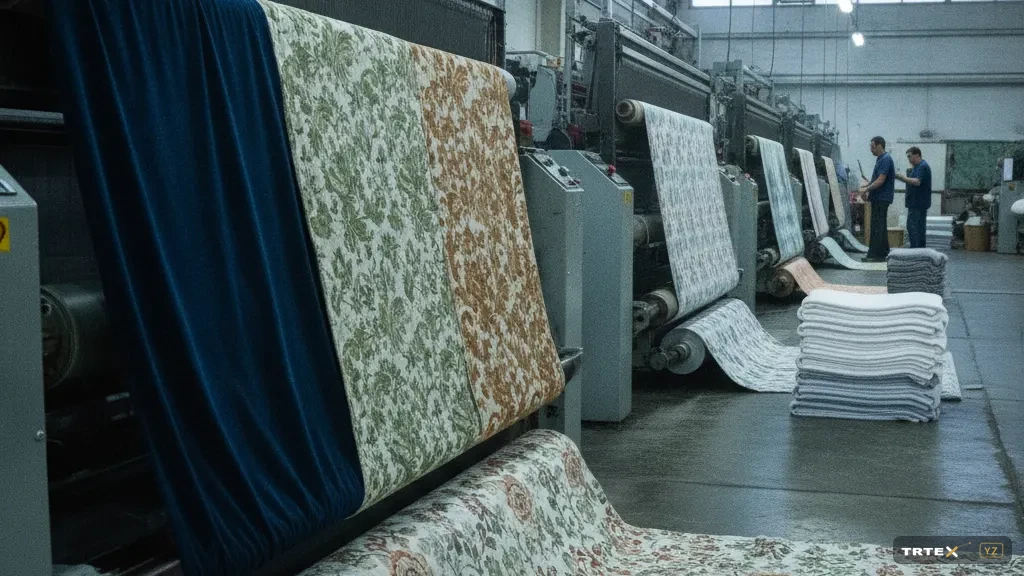
For home textile mills, AI technologies unlock revolutionary capabilities in shop-floor operational scheduling, loom monitoring, and precision automated inspection. Empirical industrial data reveals that 45% of tier-one textile manufacturers globally have already integrated computer vision and deep-learning models into their automated fabric inspection protocols. This high penetration underscores the operational maturity and efficacy of AI vision systems, which detect structural weave defects, broken picks, and tint variations far faster and with greater consistency than human inspectors, dramatically reducing customer claims and fabric scrap percentages.
Digital 3D sampling has concurrently emerged as an indispensable competitive instrument throughout conceptual styling and collection drafting. Adopting digital 3D virtual prototypes generates up to 60% savings in new product development expenditures while compressing seasonal development timelines from months to days. This agility empowers mills to engineer responsive, trend-synchronized drapery and upholstery collections with minimal raw material waste. Furthermore, machine-learning algorithms optimize plant scheduling, predictive mechanical maintenance across air-jet and jacquard looms, and industrial energy consumption, processing continuous sensor streams to eliminate shop-floor bottlenecks before disruptions materialize.
Artificial Intelligence for Wholesalers: Predictive Demand Analytics and Algorithmic Inventory Optimization
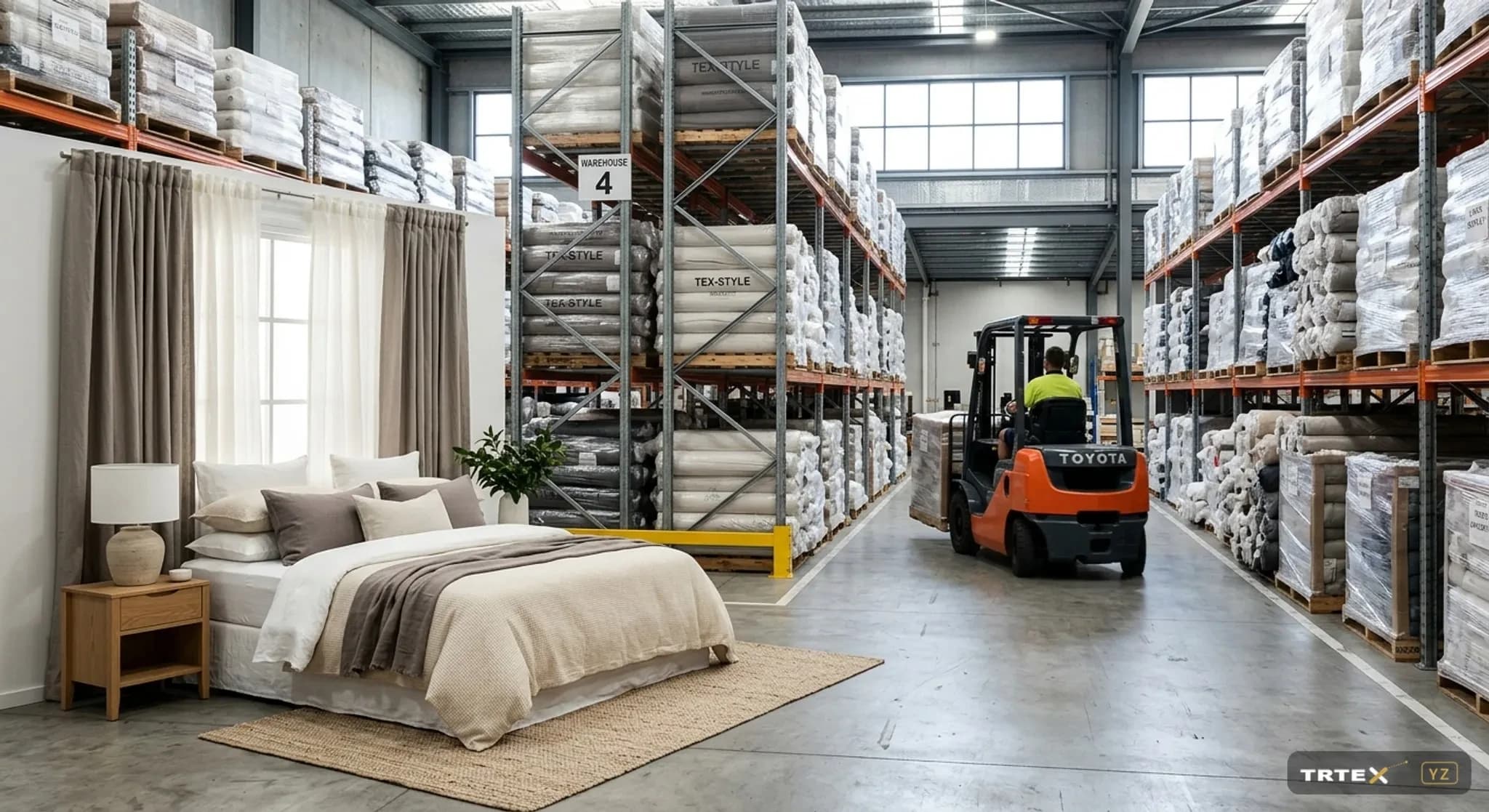
For home textile wholesale distributors and converters, artificial intelligence serves as the paramount operational instrument for maximizing stock liquidity and insulating enterprises against market volatility. AI algorithms deliver exceptional precision in sales demand forecasting and stock replenishment. By processing multi-year historical invoice data, seasonal weather variations, macroeconomic currency indices, and real-time social interior design sentiment, machine-learning models forecast demand with extraordinary precision.
- Algorithmic Demand Forecasting: AI models analyze regional transaction patterns and micro-trends to predict precisely which fabric yardages and colorways will be required, enabling wholesalers to streamline safety stocks and eliminate stockouts.
- Dead Stock Identification and Mitigation: Through continuous warehouse database telemetry, AI identifies slow-moving rolls before capital becomes frozen, automatically recommending dynamic promotional pricing strategies to safeguard cash flow.
- Dealer Network Behavioral Segmentation: Machine-learning models categorize B2B retail dealer networks based on order cadence, product affinities, and credit velocity, allowing distributors to deploy customized marketing and localized discount structures.
- Dynamic Pricing Analytics: Algorithmic pricing engines evaluate wholesale market competition, logistics fluctuations, and real-time replenishment lead times to adjust volume price breaks dynamically, maximizing gross trading margins.
These algorithmic capabilities empower wholesale executives to transition away from subjective intuition toward data-driven governance, curbing carrying costs and adapting dynamically to consumer shifts. Integrating AI into wholesale infrastructure creates an agile, highly defensible commercial model.
Artificial Intelligence for Retailers: Hyper-Personalized Customer Experiences and Modern Interior Commerce
For home textile retailers, curtain showrooms, and e-commerce merchants, AI represents the ultimate mechanism for personalizing shopper journeys, escalating conversion rates, and optimizing store operations. According to KPMG's Global Consumer and Retail CEO Outlook, 64% of retail chief executives prioritize AI as an imperative capital investment, with 73% allocating 10% to 20% of total technology budgets to AI initiatives over the coming 12 months. These metrics illuminate the profound strategic priority commanded by artificial intelligence in modern retail commerce.
Within Turkey's retail landscape, AI investment concentrates heavily on predictive pricing, customer journey analytics, and automated supply fulfillment. Retailers harness AI to decode consumer preferences by processing past purchases, digital lookbook engagement, and spatial room dimensions to generate hyper-relevant drapery and bedding recommendations. Immersive virtual room visualizers and Augmented Reality (AR) tools allow consumers to preview custom curtains and upholstery fabrics within their own homes, transforming the online shopping experience and slashing return rates.
On the retail floor and across e-commerce logistics, AI algorithms predict localized store inventory requirements, preventing costly regional overstocks while eliminating stockouts. AI-powered customer service chatbots resolve complex sizing and fabric care inquiries instantly, elevating consumer satisfaction while freeing staff to focus on high-value bespoke consultations. Consequently, home textile retailers simultaneously foster customer loyalty and streamline overheads.
Government Incentive Frameworks: State Subsidies Financing the AI Transition in Turkish Textiles
To accelerate the structural adoption of artificial intelligence throughout Turkey's manufacturing ecosystem, governmental agencies administer several robust incentive programs designed to co-finance technological modernization:
- KOSGEB Artificial Intelligence Loan Program: Directed toward accredited technology startups possessing the official Technopreneurship Badge (Teknogirişim Rozeti); traditional home textile mills are typically ineligible—the primary gateway for textile manufacturers is the SME Digital Transformation Support Program detailed below. For accredited enterprises, applications run from July 9 to December 31, 2026, via the SME Information System, co-financing AI data centers, cloud processing, and data storage architectures, while excluding plant hardware like cameras and looms.
- SME Digital Transformation Support Program: Explicitly incorporating artificial intelligence within its statutory scope, this KOSGEB program finances structural digitalization across manufacturing SMEs. Mandatory application prerequisites include an official Digital Maturity Report issued by an accredited consultant submitted within 12 months, alongside positive operating profits across the last 3 fiscal years and non-negative equity balances.
- Strategic Move Program (Stratejik Hamle): Centered on high-impact digital and green transitions, this flagship national program funds major capital modernization projects. The statutory investment qualification threshold has been elevated from 50 million TL in 2025 to 62.7 million TL for 2026. This framework provides immense capital support for prominent textile conglomerates deploying enterprise-wide industrial AI ecosystems.
Future Industry Trajectories and Strategic Roadmap for Turkish Textile Leadership
KPMG's benchmark industry study indicates that the proportion of global consumer enterprises successfully scaling AI use cases will surge from 42% in 2025 to 74% by 2026. This rapid escalation confirms that artificial intelligence has permanently graduated from tentative pilot experimentation into an foundational operational pillar of modern industry. For Turkish home textile, curtain, and upholstery manufacturers, this evolution is not merely an optional styling trend, but an absolute imperative for commercial survival. Mills that embed AI algorithms into daily operations will achieve superior margins and outmaneuver international rivals.
Governmental subventions provide decisive leverage for domestic manufacturers navigating this technological modernization. By harnessing targeted state subsidies, engineering strategic data architectures, and deploying machine-learning tools across spinning, weaving, and customer engagement, the Turkish textile industry will solidify its leadership on the global stage. Those enterprises that embed artificial intelligence into executive decision-making will decisively shape the future of international home textiles.
Background: our earlier coverage
- Artificial Intelligence in the Textile Industry: Transformation from Design to Manufacturing
Artificial intelligence is revolutionizing the textile industry across design, production scheduling, quality assurance, and predictive trend analysis, elevating productivity and customized manufacturing.